

What politics gets wrong about people
As the year ends, a reflection on why politics so often misunderstands people – and why that misunderstanding matters more than ever.
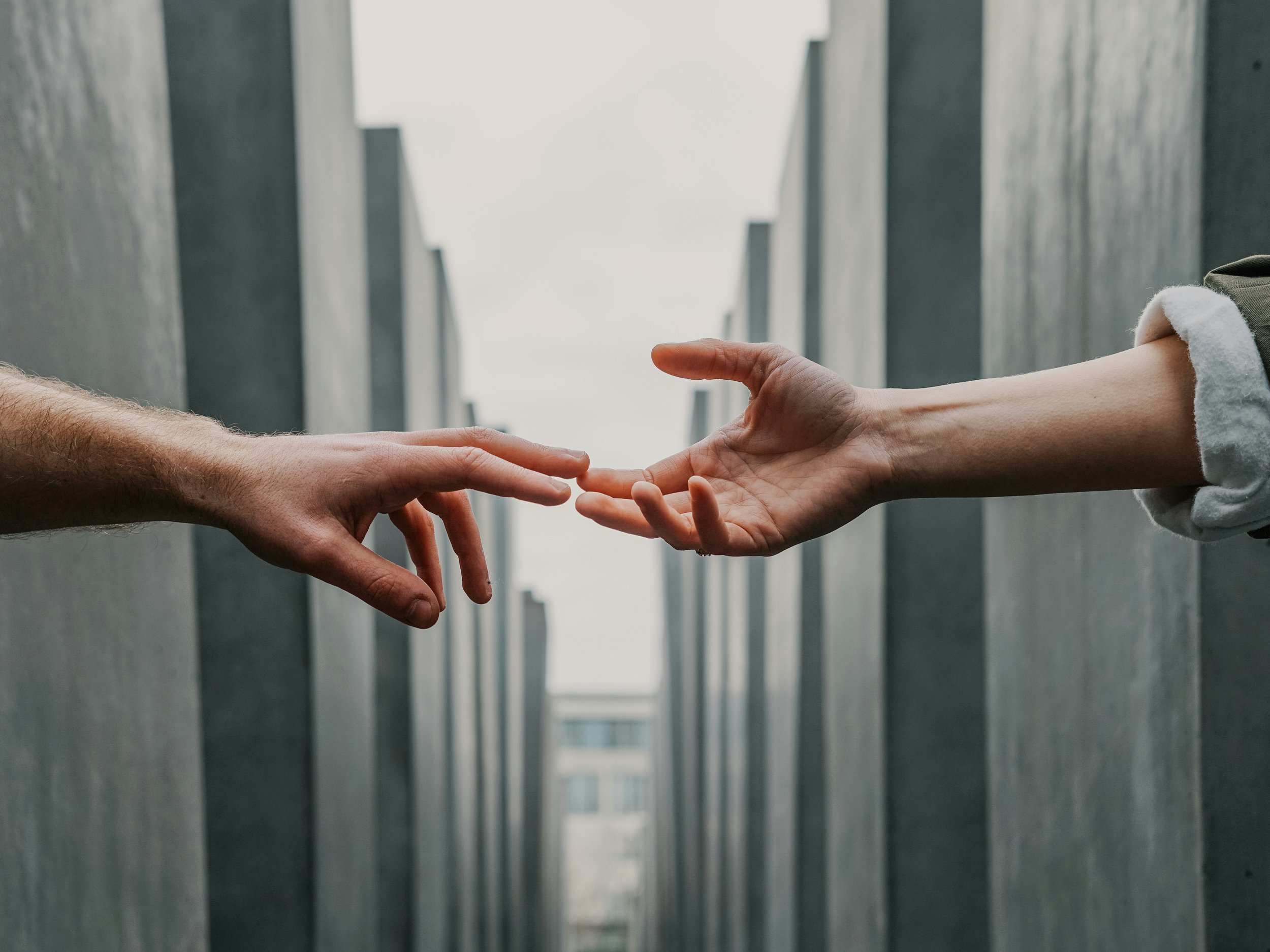
One of the strangest things about working in politics is how little it seems to trust the people it claims to represent.
Policy is often built on a bleak anthropology: that people are selfish unless restrained, apathetic unless threatened, and cruel unless incentivised otherwise. From welfare systems designed around suspicion, to policing models built on deterrence, to political messaging that assumes the public must be frightened into compliance, there is a quiet but persistent assumption that human beings left to themselves will choose badly.
This year, more than any other, I have found myself questioning that assumption.
Not because the world has suddenly become kinder – it hasn’t – but because the gap between how people actually behave and how politics describes them has become increasingly obvious. The story we tell ourselves about society no longer matches what we see around us.
Spend any amount of time outside Westminster or Holyrood bubbles, and a different picture emerges. People care deeply about fairness. They are capable of empathy well beyond their immediate circles. They hold complex, sometimes contradictory views that don’t sit comfortably within party lines or media narratives. They are not endlessly tolerant, but neither are they irredeemably hostile.
Politics struggles with this complexity. It prefers caricatures: the irresponsible citizen, the dangerous outsider, the silent majority waiting to be mobilised. These simplifications make governing easier, but they make understanding harder.
What has struck me this year is how often public discourse confuses visibility with prevalence. The loudest voices are treated as the most representative. Extremes dominate attention, while quiet forms of decency go largely unremarked. We mistake outrage for consensus, hostility for normality.
This distortion has consequences. When political systems assume the worst of people, they design institutions that bring out the worst in them. Suspicion becomes self-fulfilling. Alienation hardens. Trust erodes. And then those outcomes are cited as proof that the original assumption was correct.
It is a remarkably circular logic.
And yet, beneath it, something else persists. Mutual aid groups form in crises without instruction. Communities rally around strangers in moments of need. People routinely act against their narrow self-interest in ways that never make headlines. These behaviours are treated as anomalies, rather than evidence of how social life actually works.
Empathy, in politics, is often framed as fragile – something that must be protected from overuse, lest it be exploited. In reality, it is remarkably resilient. It survives hostile rhetoric, punitive systems, and relentless cynicism. What weakens it is not generosity, but exhaustion: the constant sense that caring changes nothing.
That, perhaps, is where this year has landed for me.
Much of contemporary politics feels like an exercise in managing disappointment. Expectations are lowered in advance. Ambition is treated with suspicion. Structural change is dismissed as unrealistic. People are told, repeatedly, to accept less – less security, less dignity, less faith that institutions exist to serve them.
“human nature is not the obstacle politics imagines it to be. More often, it is the resource we have consistently failed to use.”
And yet, when you speak to people honestly, what they want is rarely radical in the abstract. They want to feel safe. They want their work to matter. They want their communities to function. They want to believe that when things go wrong, someone is paying attention.
These are not unreasonable demands. They are human ones.
What politics often misses is that hope does not require perfection. It requires credibility. People can tolerate slow progress far more easily than they can tolerate bad faith. What corrodes trust is not difficulty, but the sense that systems are designed to avoid responsibility rather than assume it.
This is where I find myself, unexpectedly, less pessimistic than I might have been a year ago.
Not because institutions have suddenly improved, but because the gap between official narratives and lived experience is becoming harder to sustain. The language of inevitability – ‘there is no alternative,’ ‘nothing can be done,’ ‘this is just how things are’– is losing its grip. People no longer accept that decline is natural or that dysfunction is unavoidable.
That does not automatically translate to better politics, but it does create space.
Space for different questions to be asked. Space for responsibility to be redefined. Space for a politics that treats people not as problems to be managed, but as participants to be trusted.
Trust, of course, cuts both ways. It requires institutions willing to take risks – to invest before crises, to prevent rather than punish, to listen rather than instruct. That kind of governance is harder, slower, and far less theatrical. It does not produce neat headlines or dramatic gestures.
But it does produce something rarer: legitimacy.
As the year draws to a close, I find myself thinking less about what has failed – though there is plenty of that – and more about what endures despite it. Empathy has not vanished. Solidarity has not evaporated. People have not become monsters, no matter how often politics implies that they have.
The challenge ahead is not to manufacture hope out of thin air, but to stop designing systems that actively suppress it.
If there is a quieter optimism to carry into the new year, it is this: human nature is not the obstacle politics imagines it to be. More often, it is the resource we have consistently failed to use.
And recognising that is not naïve.
It is necessary.
