

Abduction as policy
The abduction of Nicolás Maduro by US forces and his transfer to New York to face domestic drug-trafficking charges has been widely described as shocking, unprecedented, or simply chaotic. In reality, it is something more unsettling: a lucid demonstration of how international law now functions when great powers decide it no longer applies to certain places.
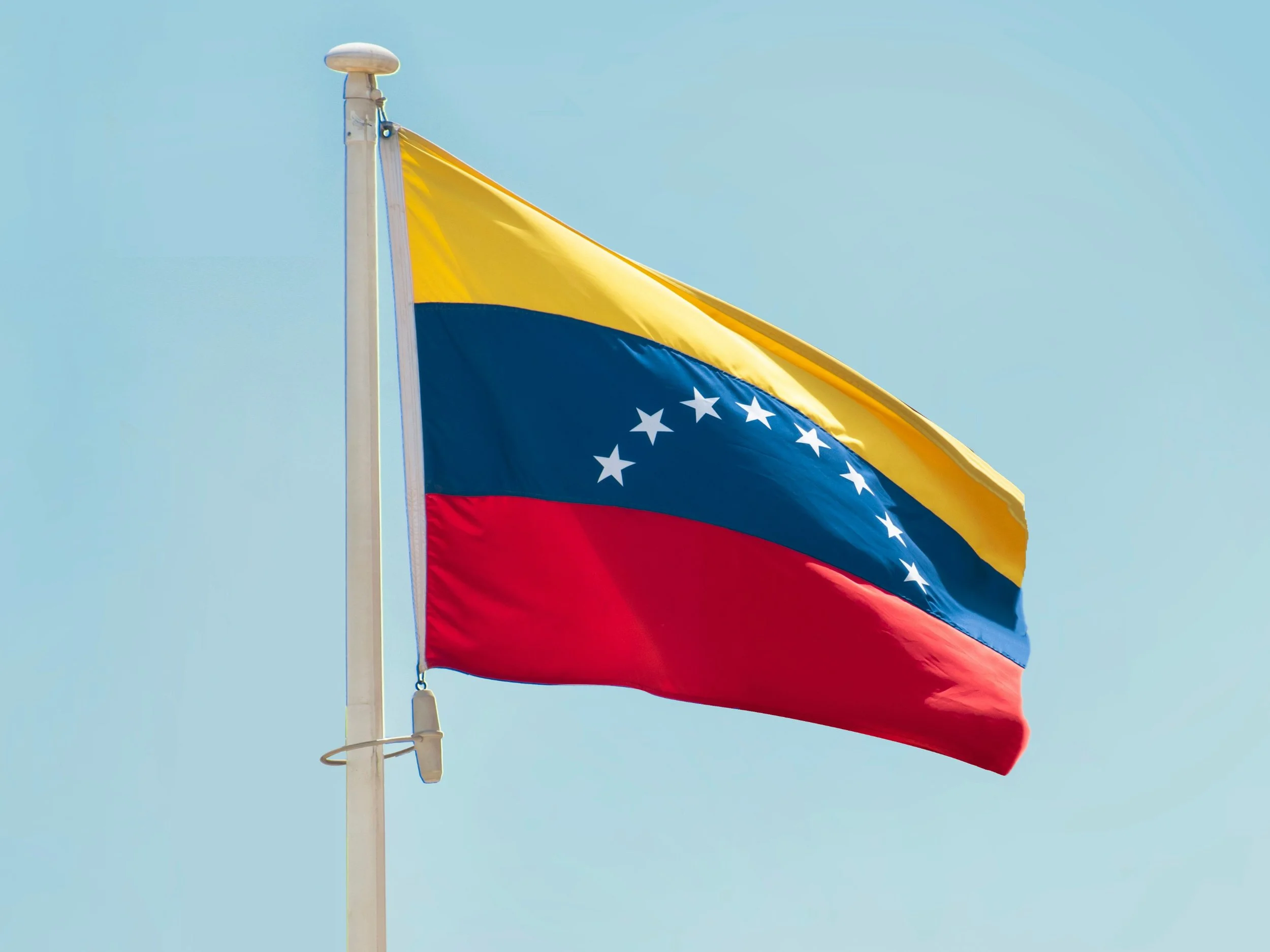
This was not a humanitarian intervention. It was not multilateral. It was not authorised by the UN Security Council. And it was not meaningfully justified under international law at all. Instead, it was presented as an act of necessity – defensive, exceptional, and ultimately beyond legal scrutiny. That framing signals not the collapse of international law, but its reconfiguration.
The UN Charter is unambiguous on the use of force. Article 2(4) prohibits it. Article 51 permits self-defence only in response to an armed attack. Article 2(3) requires peaceful settlement of disputes. Article 2(7) protects domestic jurisdiction – including decisions about political leadership – from external interference. Self-determination is not a historical footnote limited to decolonisation; it is an ongoing right of states to determine their own political futures free from foreign coercion.
Before we even reach the more complex questions, the operation in Venezuela violates the core architecture of the Charter.
The US administration has gestured vaguely toward self-defence, but no armed attack occurred. There was no imminent threat. There was no attempt to persuade other states of a legal justification, as occurred, however implausibly, before the invasion of Iraq. There was no serious engagement with international legal institutions. The absence is telling. This was not an argument made within international law, but a decision made around it.
Equally as significant is the question of jurisdiction. International law draws a sharp distinction between the power to legislate and the power to enforce. States may claim broad prescriptive jurisdiction, including extraterritorial criminal laws. But enforcement jurisdiction – arrest, detention, coercion – is territorially bounded. This is not a technicality. It is one of the clearest expressions of sovereign equality.
This is why extradition treaties exist. That is why even powerful states usually request cooperation rather than simply seizing individuals abroad. This is where historical parallels matter. In 1960, Israeli agents abducted Adolf Eichmann from Argentina. The UN Security Council condemned the act as a violation of Argentine sovereignty and warned that repetition could constitute a threat to international peace and security. The resolution passed with US support. Israel issued a formal apology. The legitimacy of Eichmann’s prosecution did not erase the illegality of his capture. That distinction was foundational: justice could not be purchased by sovereign breach.
Maduro’s seizure reproduces the same illegality – without even the pretence of an apology.
The administration’s position is that US domestic law authorises the prosecution, and that is likely true within the American legal system. Under the Ker-Frisbie doctrine, US courts do not inquire into how a defendant arrived before them. Federal courts also defer heavily to the executive on matters of foreign affairs, including recognition of governments. In short, this case will almost certainly proceed domestically.
But domestic permissibility does not translate into international legality. That gap is precisely the problem.
As a sitting head of state, Maduro enjoys absolute personal immunity from prosecution before the domestic courts of other states. This is not a courtesy; it is a consequence of sovereign equality. International law does not permit one state to sit in judgment over another through its own courts. The immunity applies irrespective of the moral character of the individual, the nature of the allegations, or the democratic quality of the regime. It attaches to the office, not the person.
This is why international criminal accountability, where it exists, operates through international courts. The ICC can issue arrest warrants against sitting heads of state because it is not a domestic court of another state. That distinction matters. In domestic courts, personal immunity is absolute while the office is held. Functional immunity – for official acts – can extend even after departure from office.
The US is well aware of this. When it prosecuted Orlando Hernández of Honduras on drug charges, it waited until he had stepped down, at which point his personal immunity had lapsed. In Maduro’s case, the abduction occurred while he was still the president, inside the presidential palace. The argument that he was ‘illegitimate’ does not solve the problem. International law does not condition immunity on recognition, democracy, or electoral purity. As the French Cour de cassation held in a July 2025 decision concerning an arrest warrant for Bashar al-Assad, making immunity contingent on recognition would grant every state discretionary power to criminalise foreign leaders and would undermine the institution of immunity itself.
“International law is not being abandoned; it is being selectively suspended – primarily in places where enforcement costs are low and resistance is fragmented. ”
Nor does international law care particularly about the form of government. It is indifferent to coups, civil wars, and internal illegality so long as they are internal. The operative question is effective control, not legitimacy. The US continues to deal with representatives of the same Venezuelan government apparatus it now claims was illegitimate. On even the narrowest practical grounds, the argument collapses.
It is possible, and necessary, to say simultaneously that Maduro is responsible for grave abuses and that his abduction was unlawful. Militarised humanitarianism has long since exhausted its credibility. Where accountability was the goal, there was an existing legal pathway: the Rome Statute, to which Venezuela is a party and under ICC jurisdiction, the regime was already under investigation.
Instead, he was seized under a narrative of ‘narco-terrorism’ – a framing that collapses criminal law, military force, and foreign policy into a single discretionary tool. This allows the US to pick and mix legal regimes – criminal indictment when useful, military force when expedient – without committing fully to any of them. This fusion has deep roots in the war on terror, where legal categories became flexible instruments rather than constraints. Its revival here is no accident.
The muted and openly deferential responses from the UK, Europe, Australia, and Canada stand in sharp contrast to the reaction to Russia’s invasion of Ukraine. Statements urge restraint from ‘all sides,’ deplore Maduro’s record, and describe the legal issues as ‘complex.’ Eighty people were killed in the operation, including civilians, and civilian infrastructure was damaged in a country already economically devastated. The global south, by contrast, has been far clearer. South Africa has called for a Security Council meeting. Spain has raised serious concerns.
This asymmetry in outrage reveals the underlying structure. International law is not being abandoned; it is being selectively suspended – primarily in places where enforcement costs are low, and resistance is fragmented. Latin America has long functioned as a testing ground for this logic. From Panama to Honduras to Venezuela, the region has been treated as a zone where sovereignty is provisional and intervention for US gain is normalised.
Trump’s revival of a hemispheric doctrine – a crude reassertion of US primacy in its ‘backyard’ – fits squarely within this history. The spectacle was deliberate. A foreign leader, perp-walked in handcuffs, offered up as proof of restored American strength. It signals dominance, deterrence, and the re-drawing of boundaries.
What is most striking, however, is the abandonment of even rhetorical commitment to the international legal order. Previous administrations at least attempted persuasion. They spoke the language of law, however cynically. This administration does not. Its justifications are inward-facing, domestic, and unapologetically unilateral.
This is not because international law suddenly failed. It is because restraint is no longer seen as useful.
For decades, the post-war order functioned not only through American power, but through American willingness to bind itself – imperfectly, selectively, but visibly. That willingness is eroding. What replaces it is not chaos, but hierarchy: a system where rules constrain some actors and not others, and where legality follows power rather than limiting it.
Latin America is not incidental to this shift. It is central to it. Hence, why Trump has also threatened Colombia and Cuba.
The danger is not simply that this precedent will be replicated elsewhere. It is that it already has been, and that the line separating law from coercion is now drawn openly along colonial contours. International law survives, but increasingly as an instrument applied downward.
The question is no longer whether this violates international law. It does. The question is whether anyone with the capacity to enforce the law still believes it should apply equally.
That is the world this operation reveals. And it is a far colder one than the fiction it replaces.
