

No such thing as a free schoolbag
A response to recent SNP education pledges, this piece questions the value of headline-grabbing “free” offers such as schoolbags and expanded childcare.
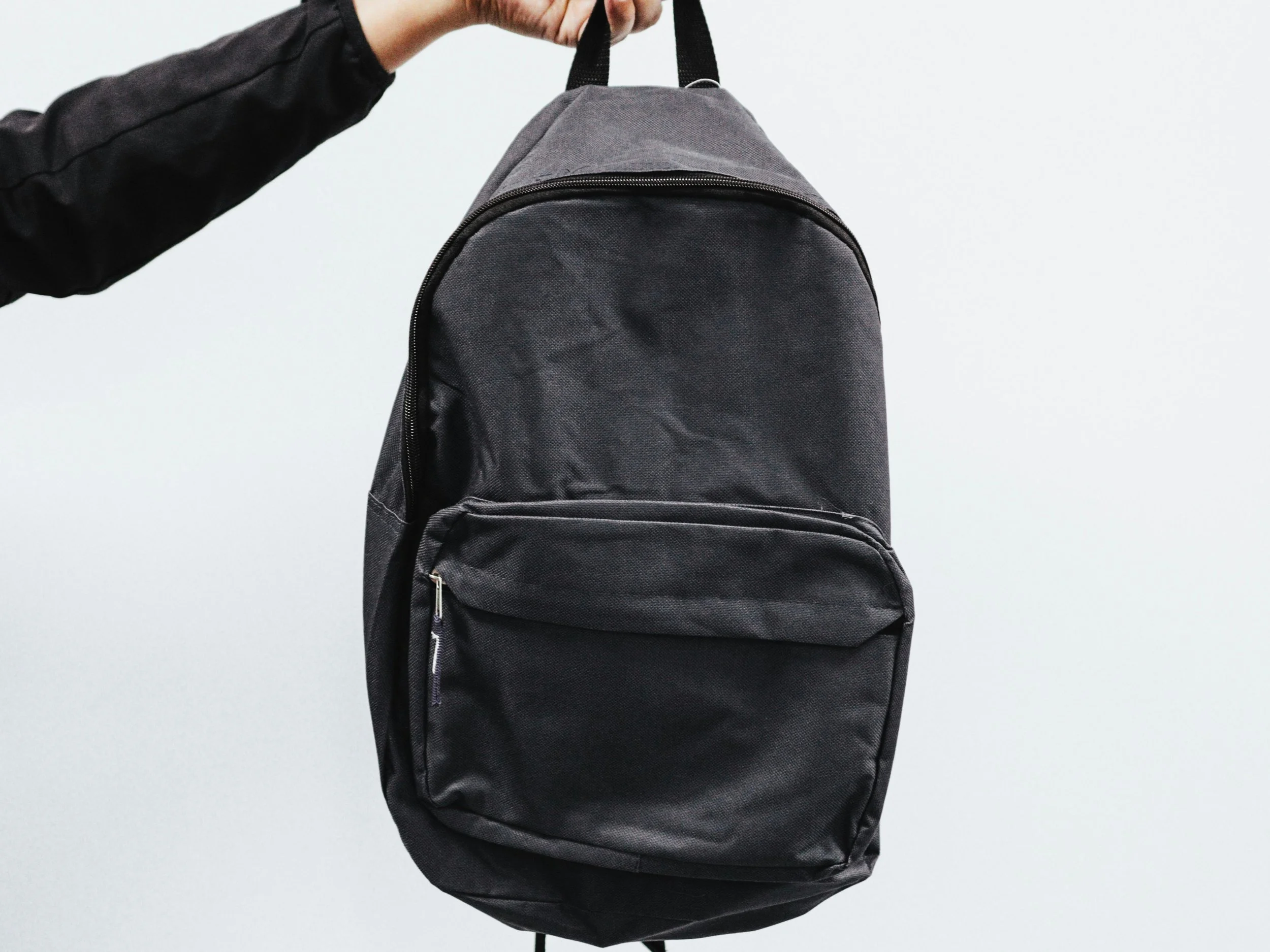
The campaign leaflet for the SNP candidate for my constituency has just landed on my doorstep. Sadly, it must have been printed too soon to mention the critical policy issue of free schoolbags, which could have swayed many a floating voter. It is possible that the schoolbags offer has been long and considered in gestation. As it has been announced just a few weeks before the election, however, it could be construed as another gimmicky gift aimed, presumably, at people whose voting intentions are likely to be influenced by the offer of some free pencils. I am left wondering what problem it was intended to solve.
What it certainly will not solve is the early disadvantage that far too many of our children experience. Though the incidence of child poverty in Scotland has fallen slightly over the past few years, at least one in five children is still living in families with officially inadequate income. Not having to buy a schoolbag is unlikely to have much impact on a household’s capacity to pay housing and fuel costs, nor to assure a sufficiently healthy diet.
On its own (much like the baby box), it does little or nothing to enable parents to give their children the best start on their developmental journey. The kind of services that might have mitigated the worst impact of poverty and detached it from its correlation with poor social and educational outcomes have been devastated through repeated rounds of cuts in public service budgets. This has left many communities bereft of the kind of accessible provision that helps parents to give their children the kind of foundation they need to support their healthy learning and development.
What was included in the leaflet, however, was the commitment intention to provide “expanded childcare “worth over £6,000”. On the face of it, this looks like a substantially greater incentive to voters. It also looks like a more effective mechanism to support learning and to enable children to achieve more equitable educational outcomes than the schoolbag. On closer scrutiny, it is not clear how much meaningful difference it will make.
The term ‘childcare’ implies a primary focus on enabling parents to enter or remain in the labour market rather than on optimising the well-being of children and supporting their more equitable development. Research has shown that better-off parents will access better quality provision in their children’s early life, using the taxpayer-funded hours to subsidise the costs. The ‘attainment gap’, measurable at age two, thus persists and widens as children get older. It is unlikely that a free schoolbag at school entry, notwithstanding the addition of some paper and pencils, will bring about much change.
What we really need are not more gimmicks and giveaways but a fundamental rethink about how we value and care for our youngest citizens. This means several policy shifts.
“Fundamentally, we must start basing provision for children and their families on evidence of what works and not on political opportunism.”
We need to recognise that providing gifts on a universal basis can be regressive, not progressive, in economic terms. If we want all our children to have the “best start in life” (to quote the government’s own performance objective), we need to ensure that children who are at greater risk of lifelong inequality receive a proportionately more significant share of resources. This means increasing cash transfers so that the direct impacts of poverty and deprivation are alleviated.
We also need to provide services that enable parents to do the best job possible through integrated community-based provision that combines parent support with early childhood health, education and care. We should consider funding models that cap costs but where families pay on a sliding scale according to income. This would enable poorer families to access services of equal quality to those used by more advantaged families.
Ensuring that there are high staff-to-child ratios and that staff are as well qualified as those teaching in secondary schools should be a requirement for all provision. At present, there is a huge dependence on private businesses in fulfilling the government’s ‘free childcare’ commitment. Increasing the number of ‘free’ hours will only increase this dependence unless funding is made available to local authorities to expand their own provision.
Fundamentally, we must start basing provision for children and their families on evidence of what works and not on political opportunism. In announcing this latest giveaway, John Swinney claimed it would build on the ‘fantastic success’ of the baby box. Possibly it might have been successful in attracting more support for Mr Swinney and his party, but evidence of its ‘fantastic success’ in terms of impact on outcomes for children seems to be thin on the ground.
I fear that the schoolbag will suffer the same fate.