

A rules-based Europe in a lawless world
Erasmus is often read as the symbol of a borderless Europe. But it may instead reveal something more fragile: a system of internal openness sustained by an increasingly uneven global order.
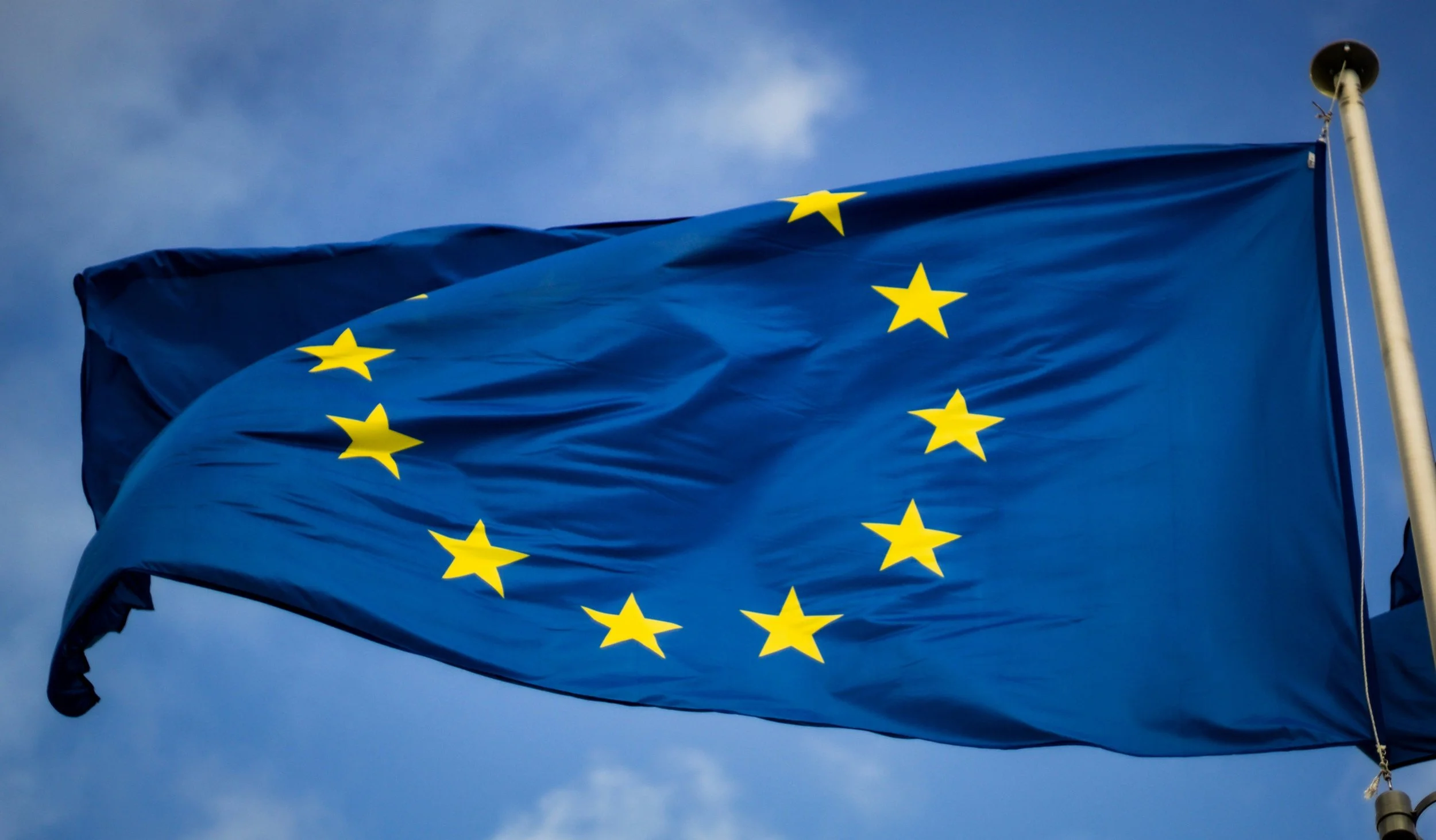
With the UK set to rejoin Erasmus+ in 2027, a familiar story has returned to public debate. Something was lost in Brexit; something generational, almost self-evident in its value. Freedom of movement, the ease of studying abroad, and the sense of Europe as a lived space rather than a distant political arrangement.
For many younger people, Erasmus is the clearest expression of what Europe felt like. Not as a treaty or institution, but as an experience: moving across borders without friction, building lives that were not confined to a single national horizon, treating mobility as normal rather than exceptional. None of this is imaginary. The programme expanded real opportunities. For people without inherited wealth or elite networks, it offered access to forms of cultural and educational movement that would otherwise have been closed off. It mattered precisely because it was material, not symbolic.
But the way Erasmus is now remembered carries its own assumptions. It compresses the European Union into a single idea: openness. A space where borders soften, rights expand, and cooperation replaces friction. That image is not wrong. It is incomplete. Because it describes only one half of what the EU is, and perhaps more importantly, only one half of the world the EU now operates in.
The European Union is built on a tension that has always existed, but is now becoming harder to contain. Internally, it is a system of high-density rules: free movement, regulatory alignment, legal integration, shared standards. It produces a space where constraints are reduced through coordination, and where governance operates less through force than through procedure.
Externally, however, it behaves differently. It negotiates, conditions, excludes, and secures. It projects influence not through equal integration but through selective access. The same political formation that removes borders within Europe reinforces them at its edges.
Both dimensions are true at once. The question is what holds them together. For a long period, the answer was a broader international environment structured, however imperfectly, by rules. Treaties, institutions, and norms provided a framework in which states behaved as if agreements carried weight. Even when violated, those rules still shaped expectations. They formed the background conditions of politics. It is that background that is now shifting.
Across global politics, the assumption that rules reliably structure state behaviour is weakening. Arms control agreements have eroded. Multilateral frameworks have lost authority. Military force has reasserted itself as a normal instrument of policy. Trade is increasingly used as leverage. International law is invoked selectively, depending on context and interest rather than shared enforcement.
This is not simply a cycle of instability. It is a change in the operating conditions of the global order. And within that shift, the European Union’s model begins to look less like a universal template and more like a historically specific arrangement – one that depends on a world in which rule-following is at least partially reciprocal.
The EU’s external strategy has long relied on what is often described as “normative power”: the ability to shape behaviour through standards, regulation, and institutional alignment rather than coercion. Countries adopt EU rules to access its markets; convergence is expected to generate stability; legal alignment is treated as a substitute for direct control.
At its peak, this model appeared unusually effective. It allowed the EU to extend influence without projecting military power, to shape governance beyond its borders through administrative and economic gravity. But its effectiveness was never purely internal. It depended on a wider assumption: that alignment would translate into durable relationships, and that rules, once adopted, would meaningfully constrain behaviour.
That assumption is now under strain.
In several neighbouring regions, regulatory convergence with the EU has not produced deeper integration. States may adopt aspects of EU frameworks while simultaneously diversifying their economic and strategic partnerships elsewhere. Trade relationships shift. Investment flows reorient. New actors – most notably China – offer alternative forms of engagement that are less conditional and more transactional.
“What looks like inconsistency is, at a deeper level, a mismatch between institutional design and global conditions.”
What emerges is not rejection of EU rules, but something more ambiguous: compliance without anchoring. Alignment without consolidation. A form of influence that does not stabilise the relationships it is meant to structure. This is where the gap between the EU’s internal coherence and external limits becomes visible.
Internally, the system still produces what it promises: mobility, legal protection, and institutional predictability. It remains, for those within it, a relatively open space compared to the historical norm of European politics. This is the Europe most visible through programmes like Erasmus, and it is not trivial. It shapes how a generation understands what political order can feel like.
But externally, the same system operates in a different register. Migration policy is the clearest example. Freedom of movement inside the Union is sustained alongside increasingly securitised borders beyond it. Mobility is expanded here, restricted there. The line is not ideological inconsistency so much as spatial differentiation.
What is often described as contradiction is, in structural terms, a form of compartmentalisation: the same political order behaving differently depending on where enforcement is concentrated and where it is delegated. This matters because it reveals something about how liberal governance actually functions. Its universality is uneven by design. It expands most effectively where rules are already dense and enforcement is shared. It becomes selective where those conditions do not hold.
The political tension arises when this unevenness is interpreted as coherence. This is why criticisms of “double standards” directed at the EU, whether in relation to sanctions, foreign policy, or conflicts such as Gaza, resonate beyond their specific content. The issue is not only whether particular decisions are justified or inconsistent. It is that liberal norms are increasingly applied in ways that appear contingent on power rather than independent of it. Values and interests do not diverge occasionally; they intersect structurally. And when they do, the capacity to enforce values without reference to interest diminishes.
From the inside of Europe, this can remain partially invisible. The benefits of integration are immediate. Mobility is experienced directly. Rights and protections are embedded in everyday life. The system is encountered as functionality rather than abstraction. But that experience is shaped by conditions that do not extend outward in the same way. This is where Erasmus becomes analytically useful, but not in the way it is usually framed. It is not evidence of what the EU is in moral terms. It is evidence of what the EU can produce under conditions of internal density: a space where rules are thick enough to generate lived freedom.
It is, in other words, a product of a particular configuration of order, not a proof of its universality. And that distinction matters, because it raises a more uncomfortable question: what happens when that configuration is no longer replicated beyond the system that contains it?
At the global level, the international order is fragmenting. Authority is more dispersed. Enforcement is more uneven. The idea of a shared framework of rules persists, but its capacity to structure outcomes is weakening. In that context, the EU is not an anomaly. It is an expression of a broader historical condition: a world in which rule-based governance exists, but no longer reliably governs.
This is why the EU appears simultaneously powerful and constrained. It can generate norms, but cannot guarantee their uptake. It can set standards, but cannot ensure their durability in environments where alternative forms of power are available. It can integrate deeply within, but only partially project that integration without.
What looks like inconsistency is, at a deeper level, a mismatch between institutional design and global conditions.
This returns us to the question that underpins debates about a post-colonial international order. If the most advanced form of regional integration still reproduces asymmetries externally, then the issue is not simply institutional reform. It is whether the architecture of rule-based governance itself can escape the hierarchies in which it was formed.
The EU demonstrates something important here, but not in a straightforwardly exemplary way. It shows that cooperation can be stabilised internally, that borders can be softened, and that law can substitute for force within certain limits. But it also shows that these achievements do not automatically scale outward. They depend on conditions that are unevenly distributed across space.
Which brings the argument back to its core tension. The European Union is often read as a model of post-national order. And in limited ways, it is. But it is also a system that depends on a world in which others continue to behave as if rules are binding, even as that assumption becomes less reliable. Erasmus, then, is not the essence of the EU. It is a surface expression of a deeper structure: one in which internal openness is made possible by a broader, more unstable external environment.
The question is not whether that makes the EU good or bad. It is whether a system built on this uneven geography of rules can remain stable as the conditions that sustained it continue to change. Because if the world is moving further away from rule-governed stability, then the real challenge is not preserving what the EU has already achieved internally. It is understanding what parts of that model can survive when the external assumptions it was built on no longer hold.
