

Freedom and the good stuff
There are a series of dogmas about choice and freedom which implies that they are the ultimate goal of human affairs. Well I’ve got a pair of jeans which suggests otherwise…
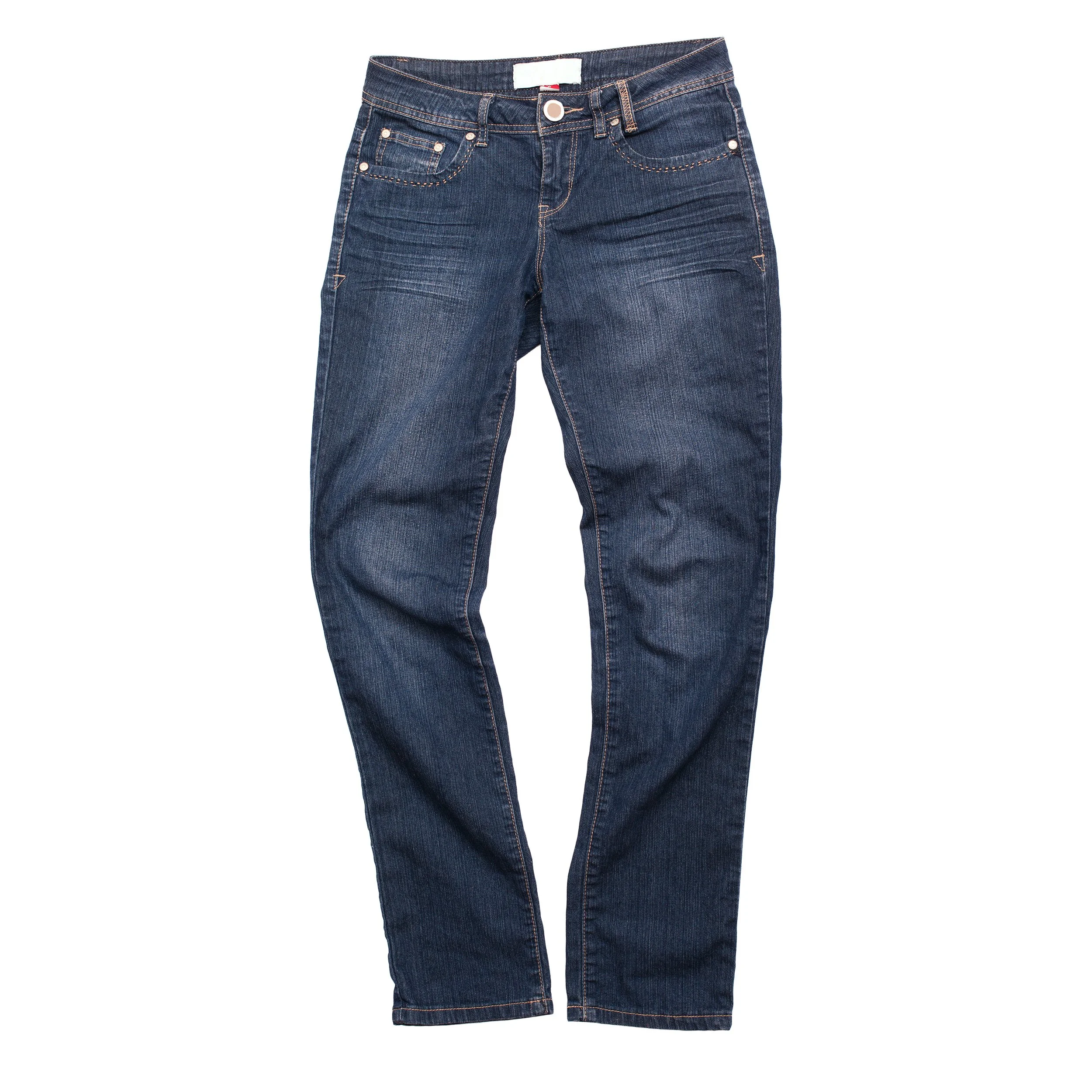
It is a strange sensation at first, momentarily unfamiliar, and then suddenly it comes flooding back like the old days – I'm breaking in a new pair of jeans. The chaffing, the squeezing, the unfamiliarity. It has left me in another lengthy personal debate about philosophy, and in particular, where the line lies between freedom and community, and whether choice makes us happy. It's a crucial question for our society.
But first, my jeans. Why so unfamiliar? Because jeans are stretchy these days. They pull on more like spandex pants than frontier working clothes. Which I dislike in itself, but as we've got chubbier and chubbier, they've got stretchier and stretchier.
And whereas I had a pair of jeans I bought in the late 1990s, which lasted me more than a decade (and just kept getting better), at some point, I noted that I was struggling to keep a pair of jeans looking good for three years. It's not just cheap jeans and their weak fabric, faulty zippers, and feeble seams; even mid-market denim, which is more expensive, fails to last now.
They become shapeless, saggy, horribly wrinkled. I didn't remember this happening when I was younger, so I looked into it. Very simply, there is more and more elastane (Lycra) in denim now, and that gives it its stretch, but it also makes it more delicate. If stretched too often or heated, the little strands of elastane snap.
And since it is they who are giving the jeans their shape, when they go, the jeans go. And I can't countenance this any more. The waste is horrifying. I have learned more about this and so decided just to spend a bit more on some 100 per cent cotton denim jeans and some 'low stretch' jeans with under one per cent elastane.
These will also 'stretch', but it is cotton, so they will stretch naturally and retain that stretch, shaping themselves to me, becoming my jeans. I hope to have these all in a decade.
I can't get away from this lesson any more. A few years ago, someone broke the second cheap Lidl espresso maker we had, which managed little more than 18 months each. I did some research, found a reconditioned good quality machine, bought it and have never looked back. It is solid, reliable and makes the best coffee I've ever made.
Or dishwashers. After two cheap dishwashers and one mid-market one broke down in the space of six years, I again started to look into what would last. We couldn't afford the extra cost, but it was costing us more to buy cheap ones, so we put it on the credit card. It is comfortably the best dishwasher we've ever had, and over the ten to 15 years I expect it to work, we'll save substantially.
So now I have the best jeans I've had for a while, undoubtedly the best coffee I've ever made and the cleanest dishes we've ever seen in this house. It was all a struggle financially, but I am now confident that this is going to save us a substantial amount of money. I am coming to hate cheap stuff – philosophically, morally, financially, experientially.
The point is, I wish someone had forced me to do this right the first time. I had all the freedom in the world to select from a vast 'free' market – and it made me choose exactly the wrong thing, for me, for my bank balance and for the world. Disposable capitalism is stupid and horribly damaging, and the experience of it is soul-destroying.
Freedom, meaning 'absence of oppression, right to speak freely, not prey to random violence, no arbitrary removal of liberty' is clearly a good thing, but those are actually negatives, the absence of a harmful condition.
Freedom, meaning 'to do whatever the fuck I want and to hell with the rest of you' is a totally different prospect. This is what the Musks and Vances and Thiels mean by freedom, which obviously works well if you're a billionaire and would like to not consider the consequences of your actions on others.
There are lots of problems with this second kind of freedom. It is exhausting – our brains are literally designed to avoid constantly making unnecessary choices because it uses up a lot of energy. It doesn't make us happy – we are bad at making rapid decisions because we prioritise short-term gratification over long-term actions, which would reward us much more sustainably.
And it is an endless source of conflict, because sooner or later, my choices and your choices will conflict if they are all made on whims and not through a moral framework. I grew up in a world filled with self-regulation of all these things – eyes bigger than belly, don't blow your own trumpet, good things come to those who wait, fools rush in, you can't eat your cake and have it too, never sell your soul...
“Freedom isn’t being able to do anything you want all the time and to hell with everyone else, but it isn’t without meaning or value either and we know what it looks like when it is taken away”
The fundamental problem with a market of proliferating free choices is that it is not an equal information system. Every one of those moral maxims which I grew up with has been obliterated – go on, you're worth it, fake it to make it, why wait when you can have it now, FOMO, monetise your personal brand...
The entire world of advertising is there to make us make the choices someone else wants us to make, and if there is one thing we know, it's that those who sell us things want to take as much of our money as they can, and they've been trained to believe that because they are 'entrepreneurs', this is a good thing.
This is the rapid cycle of sell and then immediately try and sell again, compete on price, knowing quality is dreadful, and so will induce another sale soon. But tricking people into buying things you know won't last is the Willie Loman curse, the designed obsolescence of objects in Arthur Miller's play, which all act as a metaphor for the disposability of our troubled lead character.
So this is my question: in a totalitarian McAlpine state, would you be free to buy dreadful, disposable jeans and fast-breaking plastic coffee machines and dishwashers that don't work properly? We assume that it is illegal to sell me a product that doesn't work when I get home, but we assume it is my problem if it breaks down in six months. Why? Was capitalism meant to be a lottery?
Should we not be able to buy products with a reasonable expectation that they will successfully survive a normal lifespan? As always, who should pay for the end of life of a disposable product? Me as a consumer or me as a taxpayer? And if it is the latter, where is the pricing signal that free market economists believe should be there to make me 'choose better'?
This highlights a small range of actions - pricing mechanisms (for example, with whole life pricing, so you pay for the decommissioning, which is loads for jeans with plastic in them, but nothing for 100 per cent denim). Regulation (mandatory extension of warranty periods, say, or prevent the use of non-recyclable materials). Prohibition (we just nominally banned disposable vapes altogether). Information (clear labelling to explain what you're buying and its consequences).
For more reasons than I can count, we need to get this right. We need a balance between the wild, destructive 'freedom' of a private equity-owned free market world and the rigid, restricted existence of a teenager in Soviet Russia. And getting that balance right is tricky.
If you do it gently through nudging, then you need to calibrate your nudges very carefully. Too much and it would be better just to prohibit, too little and it doesn't work at all. If you prohibit, then be ready for a fight – not so much with the public as with the capitalist class. Enabling actions are great, for example, through 'cost spreading' with leasing or by paying in instalments.
But it all needs education; I thought cheap clothes were helping me out until I really got into environmental economics and realised I was being conned (and looked cheap in the process).
The point here isn't for me to outline my personal solutions. Mine would involve a fair bit of regulation, a bit of prohibition, a lot of true-cost taxing, a different school education and a post-capitalist shift away from lowest price all the time through different approaches to finance, such as leasing, plus strict control of advertising.
I believe most people would be happier with fewer choices. What I'd give to be able to swap the endless scroll through dozens of cloned products on Amazon (where I seldom shop now) in favour of one brand of good, reliable basics I knew I could trust, made well and designed to be repaired or recycled. I'd love to use that scrolling brainpower for something more constructive.
In fact, I can imagine myself being happy to lease quality basics, even like jeans. Perhaps I pay a pound a month for top-notch jeans, and then when the pair I have is worn out, it is replaced and my old ones recycled in a closed loop. There is a lot of innovation needed to get out of our current harmful consumption patterns.
The point here is to encourage this debate. It is a trick of the right-wing media to make 'freedom' non-negotiable, a permanently-good social goal we should aspire to, and it needs to be undone. Freedom isn't being able to do anything you want all the time and to hell with everyone else, but it isn't without meaning or value either, and we know what it looks like when it is taken away.
I'm very happy with my new jeans. In fact, there is barely an 'only the good stuff' purchase I've made that I regret. It also has the merit of enabling me to shop less, which is nice. But it took me a surprising amount of science and economics to get there, and I felt like I was fighting against the norms of our current society the whole time.
Helping more people to get to where I've got to is something precisely not a single politician I've ever known has ever discussed, yet I am now convinced this is the place to be. So how do we get there? To begin, we need to question where more choice is better and what freedom means in the first place.