

Some political commentators have decried the upcoming electoral battle between Nigel Farage and Count Binface as a farce that is demeaning to our democracy. Instead, we should see it as speaking truth to power where no-one else would.
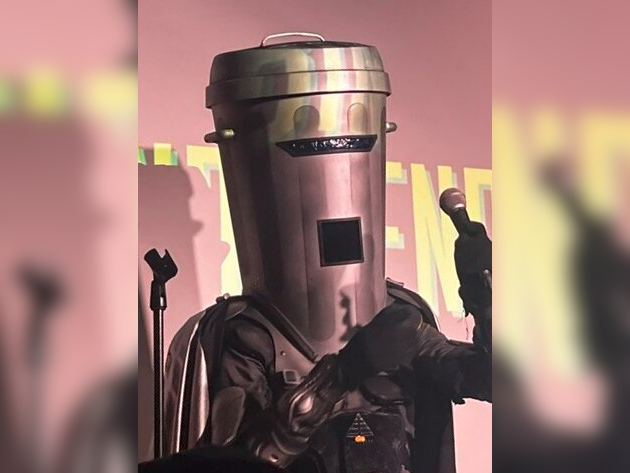
The most powerful person in Court is not the King, not his advisors, nor any of the shadowed hands behind the throne. The most powerful person in Court is the Jester. For they alone have the power speak the truth that no-one else dare utter for fear of the consequences of their words.
Nigel Farage has been under increasing pressure due to scrutiny of his opaque finances – in particular his failure to declare a £5 million “gift” made to him that he claimed was to bolster his personal security. Not used to being under the kind of scrutiny that an elected Member of Parliament must undergo in the wake of various “cash for access” scandals, he has resigned as an MP, forced a by-election and has declared he’ll stand again as a candidate. He hopes that by getting re-elected, he can claim a “people’s mandate” – if the voters think he’s a sound candidate after this election despite the financial news stories, then maybe the investigations will stop (they probably won’t).
Normally, the major political parties would face a choice when something like this happens. They could fight the by-election like they would any other, put up a spread of candidates and see what happens (this would likely result in a Farage win given the First Past the Post voting system). They could decide that knocking Farage out of Parliament is more important than their own rivalries and could stand a “unity candidate”, either all of the parties bar one dropping out and endorsing the remainder or by standing an “independent” candidate agreed and supported by all (either would have been unlikely given that the parties dropping out included those both to the left and to the right of Farage and Reform therefore have little common ground with each other).
The option they went with instead was just to refuse to play Farage’s game. He sought a “people’s mandate” by beating the other parties in a straight fight...they’ve chosen to not fight and all of the parties with elected members have chosen to not stand an candidates. The only candidates announced so far include a handful of even-more-fringe far-right party members, Jeremy Corbyn’s conspiracy theorist older brother, a man dressed as a fish finger and….Count Binface.
The election is likely therefore to be a farce. Farage is still likely to win, but very likely on the basis of a very low turnout and he can’t point to have beaten any credible opponent. He’ll still have to maintain the form of trying to get elected because to do otherwise gives up any remaining hope of claiming that credible mandate. But he’ll have to do it in a theatre where his most high profile opponent is a man playing the character of an alien wearing a bin on his head.
It’s for this reason that I’ve seen a few commentators now say that this makes a mockery of the solemn duty of our representative democracy and therefore Binface should not be standing, or should at the very least take the bin off and stand as himself. I disagree. Binface is a satirical character. He follows in the tradition of a long line of “joke candidates” in our election. But in this he is not, himself, a joke. He plays a role, and that role is to uphold our democracy by being the jester in the court.
Binface’s “manifesto” is not to be taken serious on its own face. But they are reflections of serious politics, and especially of politicians who claim to be serious about certain issues but in the end let us down.
“I have long held that a good test of a political promise is to find what I call the “Minimum Promised Deliverable”.”
The best examples of this is his housing policy. If elected, Count Binface shall promise to build “at least one affordable house”.
I have long held that a good test of a political promise is to find what I call the “Minimum Promised Deliverable”. This is the least action that a politician can take that would let them stand up and say that they’ve met the promise in full. Someone who promises to “End Climate Change” has a harder task ahead of them than someone who promises to “Achieve Net Zero by the end of this Parliament” which is again harder than someone who merely promises to “Reduce emissions by the end of this Parliament”. The third politician may well meet their promise accidentality or even despite actively trying not to.
And so with housing, we are well used to politicians claiming that they will build so many thousands of homes, or so many more than their opponent will. We are used to them being criticised by said opponent for failing to meet that promise. We all know that the term “affordable home” is so vague as to mean nothing – a house that sells for a little below the market average can be deemed “affordable” even if almost no-one can afford to buy it.
His pledge isn’t one so ludicrous low that he cannot fail to deliver it. The truth he speaks to power is that their pledges are aren’t likely to be met and aren’t likely to be sufficient even if they are. Pledging to build one house more than your opponent doesn’t answer the question “Is that enough houses?”.
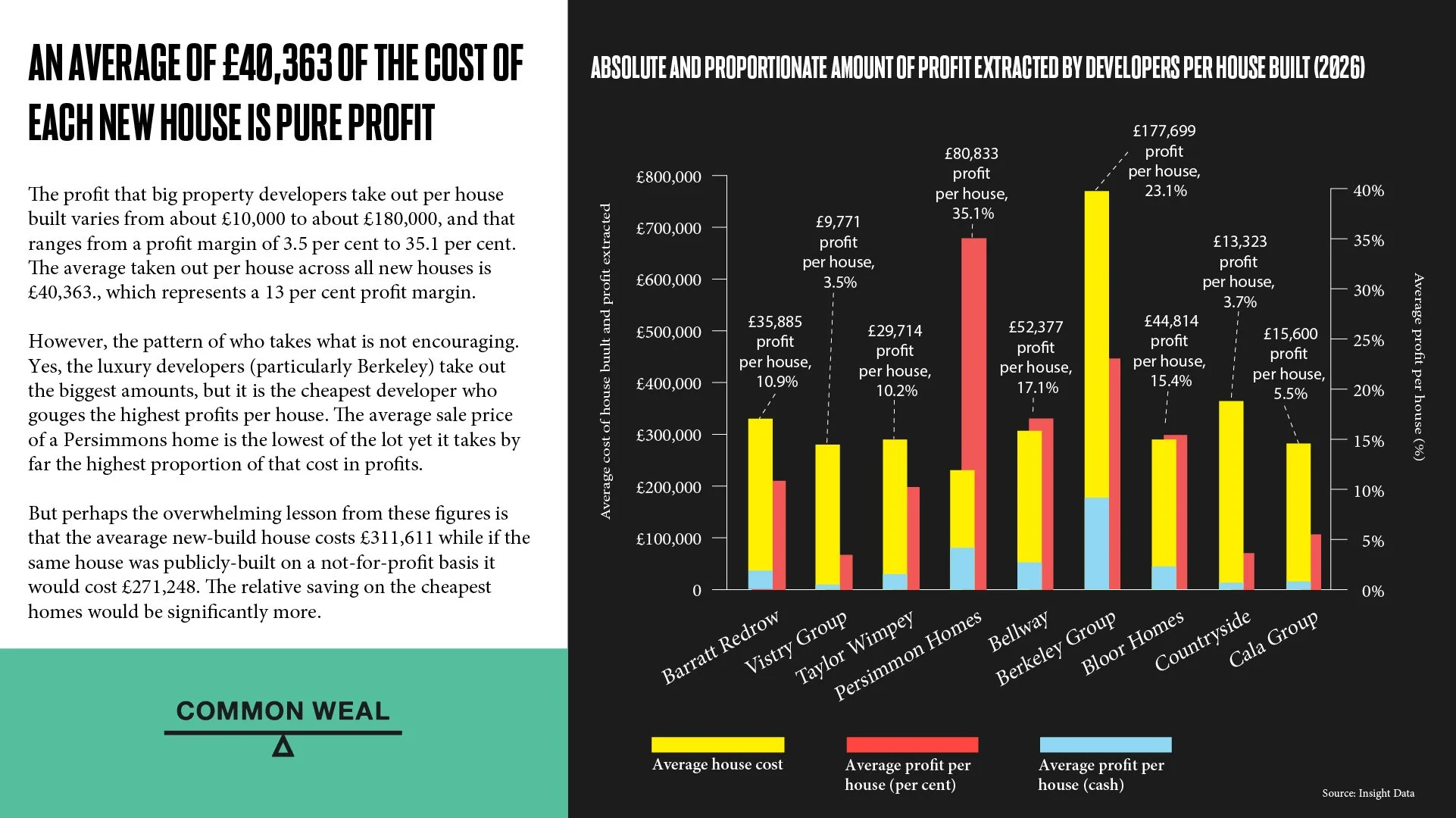
There are 34,000 homeless households in Scotland. The SNP pledged in their recent manifesto to build 110,000 affordable homes in this Parliament. It would be technically possible to give a new affordable home to a homeless family for free (something that would be cheaper than leaving them homeless) and end homelessness in Scotland within two years. But there is little appetite for that to happen from Government, this would likely mean other people who also need houses having to wait a bit longer and, probably most importantly for the government, it might hurt developer profits.
Count Binface and all others who take part in his tradition of the “joke candidate” should not be condemned for doing so. They serve a vital and important role in keeping our “serious” politicians honest, setting a floor of what they can get away with with their policies and, above all, acting like the slave who’d stand behind a Triumphant Roman General reminding them of their mortality although in this case the words being whispered might instead be “you have taken yourself too seriously”.
And while the election against Farage is very likely only going to go one way, there is a chance that it might not and the man behind the bin may well find himself entering Parliament (headwear being prohibited by the arcane rules of that place). This may well not be a bad thing in itself. Occasionally, even the joke candidate can win.
