

A summer of sport: Why we should invest in the things that bring us together
Inspired by a summer packed with world-class sport, this article reflects on why sport matters, how easy access can be lost, and why every child deserves the chance to experience the sense of belonging it creates.
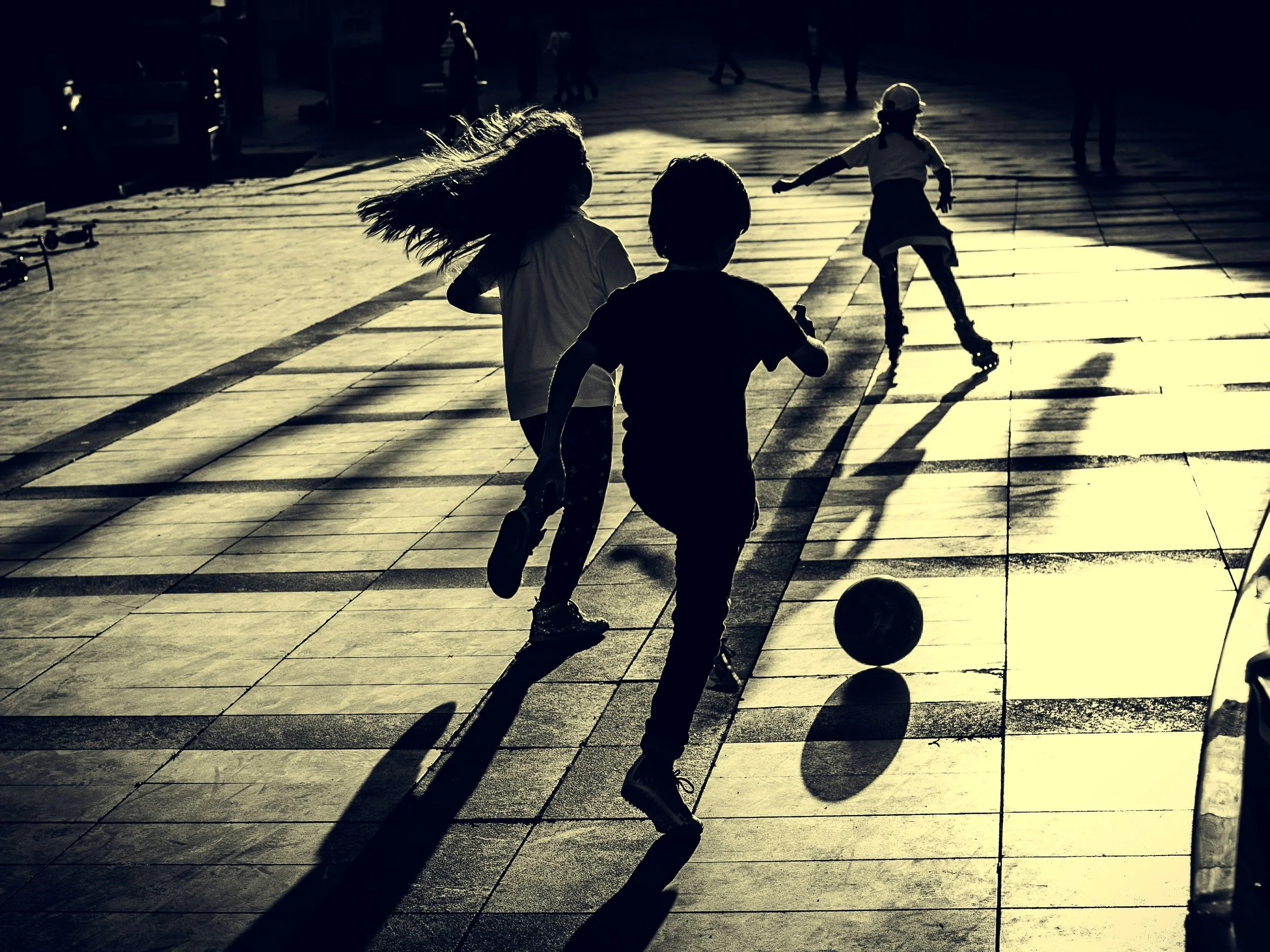
Sport is not everyone’s thing. Some people find joy in books, music, gaming, creating, socialising, or countless other ways of spending their time. But across the world, few things can capture collective attention quite like sport.
This summer has been an extraordinary reminder of that.
For Scotland, it has been a particularly special period. The football World Cup brought thousands of fans together in celebration, even if our journey ended before the knockout stages. Wimbledon continues to capture the attention of millions. Glasgow is preparing to host the Commonwealth Games once again. Scotland’s women’s hockey team are competing on the world stage, the women’s cricket World Cup is finished, the Rugby Nations Championship is beginning, and Formula One continues its annual global spectacle.
My sister recently sent me a message expressing her excitement at the sheer amount of sports available to watch. Her evenings were suddenly filled with competition, anticipation and stories unfolding in real time. Her excitement made me think: what is it about sport that creates such joy? Why does a match, a tournament, or a team have the ability to make strangers celebrate together, suffer together and hope together?
And if sport can create such powerful moments of connection, why do we not do more to make it accessible to everyone?
I have always loved sport. Not because I was the fastest or the strongest, but because of the feeling it created. I did gymnastics, where I loved the precision of holding a perfect shape on the beam, the satisfaction of finally mastering a skill after weeks of practice, and the feeling of flying through the air during a vault. I played hockey, where there was something exhilarating about sprinting down a pitch with the ball on my stick, working together towards a shared goal. I played netball, where I discovered a natural rhythm for shooting and the confidence that came from contributing to a team.
But eventually, I had to give these things up. Gymnastics became too expensive and too difficult to access. The better facilities were in another city, and even getting to existing classes was a challenge. My best friend’s grandmother had to drive me every week because there were no realistic transport options. We did not have the same equipment as larger clubs, meaning we lacked the resources that allowed others to progress.
Hockey became increasingly difficult, too. Away games often required early Saturday travel that I simply could not manage without family support. There was no convenient public transport, no easy carpool option, and membership costs continued to increase. The same happened with netball. We had enthusiasm and commitment, but not the infrastructure or resources needed to develop seriously.
Years later, I have rediscovered my love for netball and now play every week. Through this, I met someone from Australia who described the enormous difference between netball there and here. In Australia, she explained, the sport has a completely different cultural status. It has investment, facilities and a deeply embedded sporting culture. Netball is not simply something people do occasionally; it is part of community life.
Here, even finding somewhere to play can be a challenge. Our local courts are flooded, leaving us without games for weeks. Eventually, we were moved to the Emirates Arena, one of the venues being used for the Commonwealth Games. While it is an incredible facility, it highlighted a strange reality: in a city preparing to host a major international sporting event, there were still very few spaces available for ordinary people to participate in community sport.
This contradiction exists across Scottish sport. We celebrate elite athletes when they succeed, but those successes depend on foundations built years earlier: accessible clubs, affordable facilities and opportunities for children to participate.
“The greatest legacy of a sporting summer is whether more people are given the chance to pick up a ball, step onto a court, enter a gym, join a team and experience that feeling of belonging for themselves.”
Sporting organisations across Scotland have repeatedly warned about the pressures they face. Rising costs, increased demand and reduced real-terms funding have placed many community programmes under strain. Organisations have been forced to cut activities, reduce staffing and increase membership fees to continue operating. The consequence is that sport becomes less accessible precisely at the moment when we realise its value.
Because sport is not simply entertainment. It is a social institution.
However, this summer also presents an opportunity to recognise what investment in sport can achieve. The return of the Commonwealth Games to Glasgow is a remarkable example of sport being given a second chance. After Victoria, Australia, withdrew from hosting the 2026 Games due to concerns over rising costs, there was a genuine possibility that the event could disappear entirely. Instead, Glasgow stepped forward to host the Games once again.
The 2026 Games will look different from the previous edition. They will be smaller in scale, with fewer sports and a more streamlined approach. But perhaps that is part of their significance. Rather than allowing the Games to vanish, Scotland has helped give them a new life.
Glasgow has a unique sporting history. The 2014 Commonwealth Games left a lasting legacy through investment in facilities, regeneration and international recognition. Returning more than a decade later provides an opportunity not only to showcase elite competition but to inspire another generation of participants. The challenge, however, is ensuring that a sporting legacy extends beyond the venues themselves.
The Scottish Government has recognised this. Recent commitments include an additional £40 million uplift for sport funding in the 2026 budget, alongside £20 million for the “Summer of Sport” programme. The initiative aims to provide children and young people across Scotland with free or low-cost opportunities to take part in sport, ensuring that the excitement surrounding the Commonwealth Games reaches communities across the country.
This matters because the legacy of sport should not be measured solely by the number of medals won or records broken. It should be measured through the child who discovers a passion for a new activity, the community that gains access to a facility, or the person who finds friendship and a sense of belonging through a team.
The Summer of Sport programme reflects this ambition. Based at Kelvingrove Park, it will offer young people opportunities to participate in sport while allowing communities to experience the excitement of the Commonwealth Games together through live coverage and shared events. It is an attempt to bring elite sport and grassroots participation closer together. As Forbes Dunlop, Chief Executive of sportscotland, has highlighted, the challenge is not simply delivering a successful Games, but inspiring a new generation to become active. The greatest impact of a sporting event may not happen during the competition itself, but afterwards, when a child watching from home decides they want to pick up a ball, enter a gym or join a club.
This is the wider significance of sport. Sociologist Émile Durkheim described collective consciousness as the shared beliefs and emotions that bind communities together. Sport is one of the clearest modern examples of this. A team becomes more than a collection of individuals; it becomes a symbol of belonging. Fans who have never met sing the same songs, wear the same colours and experience the same moments of joy and disappointment.
A football match, a hockey tournament or an international competition creates a shared emotional experience. Millions of people can feel excitement, anxiety, pride or heartbreak at exactly the same moment. They may come from different backgrounds, speak different languages or have completely different experiences of the world, but they can still understand the beauty of a perfect pass, the frustration of a missed opportunity or the brilliance of an incredible performance. That is the power of sport. It creates a common language.
Research into sporting communities has shown that feeling connected to a team can strengthen social identity and belonging. People do not simply watch sport; they participate in it emotionally. They form friendships, build communities and create memories through shared experiences. Of course, sport is not perfect. It can reproduce some of society’s worst problems, including racism, sexism, ableism, nationalism and exclusion. We have seen moments where sporting rivalries become hostile rather than celebratory. Sport does not automatically create unity.
But it creates the possibility of unity. What matters is the environment we build around it. At its best, sport reminds us that humans are capable of coming together around something joyful. In a world often defined by division, isolation and constant online conflict, there is something powerful about gathering in the same place, cheering for the same goal and sharing an experience with people we may never otherwise meet.
This summer’s sporting events offer a reminder of what sport can provide. But they should also encourage us to ask a bigger question: are we doing enough to ensure everyone has the opportunity to be part of it? Because sport should not only be something we celebrate when athletes reach the world stage. It should be something we invest in from the very beginning, in parks, clubs, schools and communities.
The greatest legacy of a sporting summer is not just the medals won or the matches remembered. It is whether more people are given the chance to pick up a ball, step onto a court, enter a gym, join a team and experience that feeling of belonging for themselves.
