

Cities for people first, tourists second
Rory Hamilton reflects on his New Year’s visit to Bilbao and wishes the simple ambitions of an affordable, more liveable city in the Basque Country would be realised in Scotland.
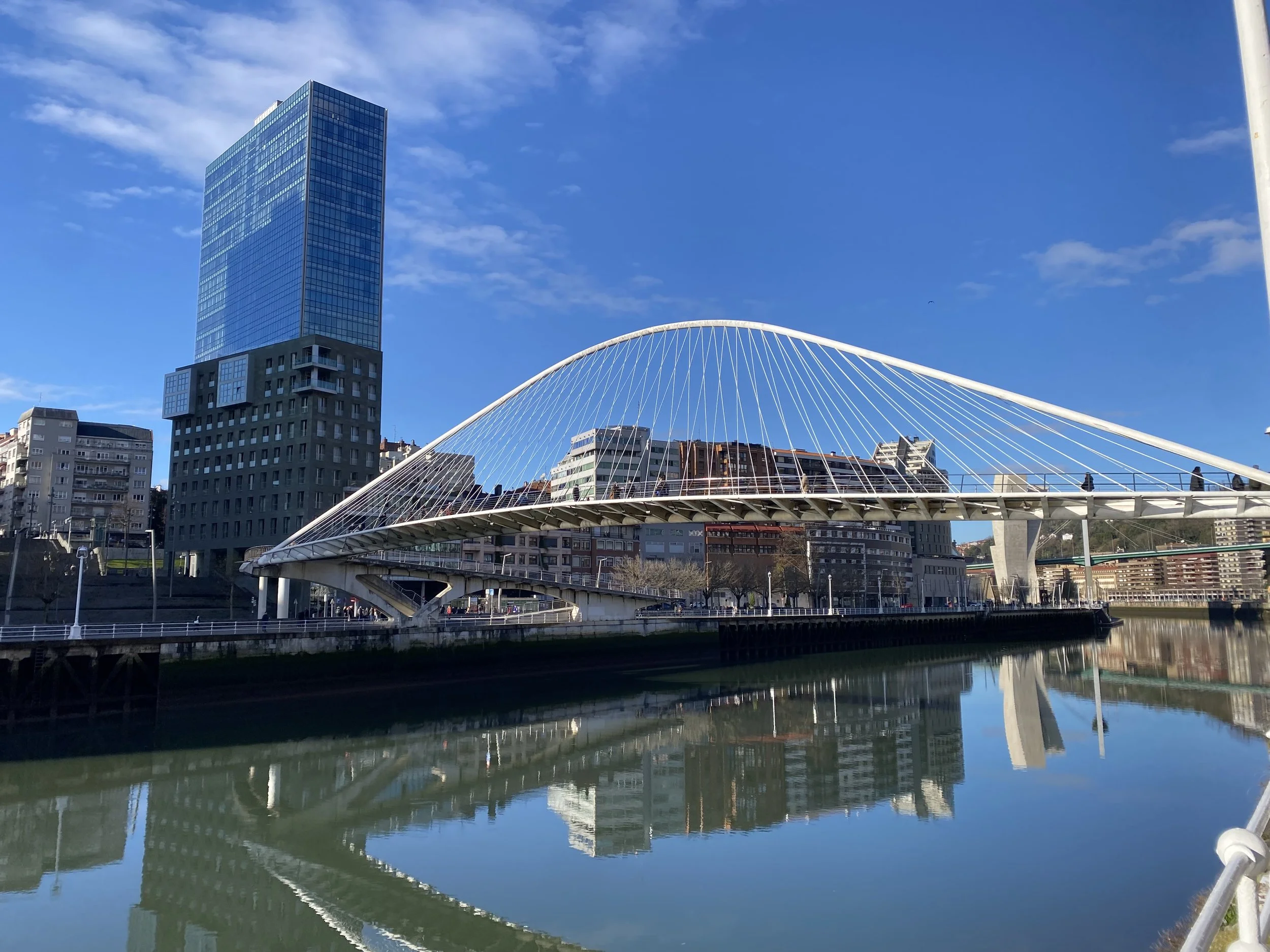
Over New Year I visited Bilbao, the heart of the Spanish Basque Country, and what struck me the most was how designed for its inhabitants it is. Now, granted, I visited over a pretty cold weekend in January - not exactly what you’d associate with tourism in Spain. But I don’t think greater hoards of visitors would have hugely reshaped my experience of the place.
Firstly, Bilbao is very similar to Glasgow, with an industrial riverside past and a set of iconic industrial images or cranes and bridges in the post-industrial era to plaster on postcards and advertising campaigns.
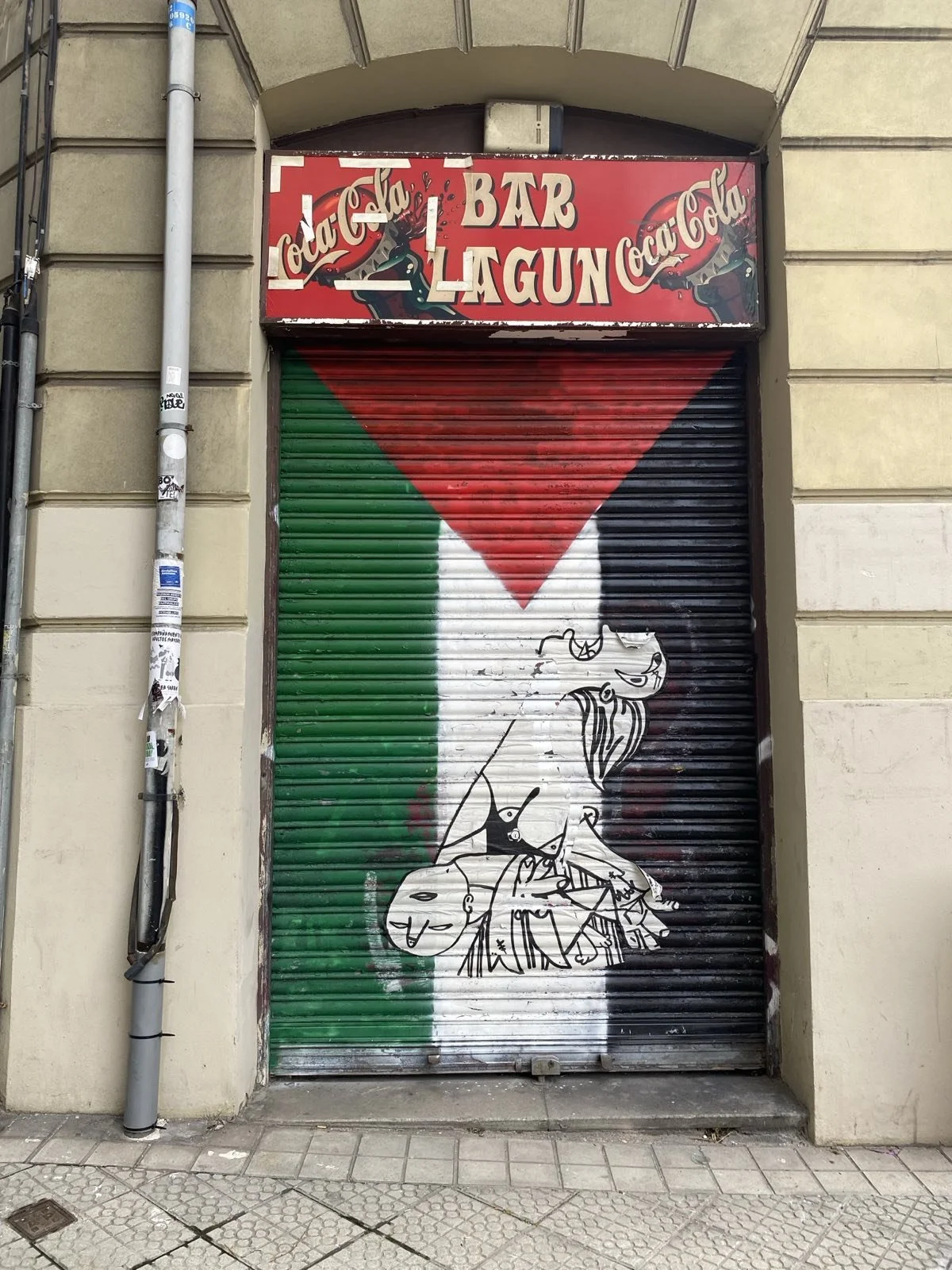
Furthermore, as a nation, I found the Basque Country to hold far more similarities to Scotland than Catalonia - a favourite comparison of the Scottish independence movement. The landscape, the weather, and the need to deep fry most of their food all made me feel at home in a city roughly the size of Newcastle. It was also hard to avoid the show of solidarity by the Basque people for the Palestinians - flags and murals everywhere. This gave me some hope that despite the ignorances and complicity of our political leaders in the genocide, ordinary people the world over are outraged by what is happening and are actually doing something about it.
But what does it mean to be a city made for the people who live there? It’s not as if there are no landmark tourist attractions - I’m sure most people who had at least heard of Bilbao would have highlighted the Guggenheim Museum with its iconic Frank Gehry-designed architecture; some more learned individuals might mention the Bizkaio Zubia or Hanging Bridge - the oldest transporter bridge in the world. The Casco Viejo area is reminiscent of many a European city (or even Edinburgh), with the narrow streets (Zazpikaleak in Basque, meaning the Seven Streets in reference to the original port of Bilbao) forming the centre of the old town around which the city has grown.
It’s not somewhere oversaturated with things to do like London or Paris, where you feel guilty for not going out and making the most of each day by visiting as many places on the must-see guides as you can. It feels more like a return to what a holiday is meant to be, about relaxing, taking things slow and recharging your batteries by enjoying life.
“It was hard to avoid the show of solidarity by the Basque people for the Palestinians despite the complicity of our political leaders, ordinary people the world over are outraged.”
But it wasn’t just my partner and me enjoying life, the inhabitants of Bilbao filled the Pintxo bars, and drank outside in deep conversation everywhere we went, no matter the weather, the cafés seamlessly transitioned from daytime economy to night economy. I’ve lamented this lack of a sociable culture in the UK and Scotland before, but the weather in Bilbao (muggy, cold and regularly raining), showed me that our weather isn’t enough of an excuse.
In exploring the city, we were advised to purchase a ‘Barik Card’ to pay for public transport, and yet you almost didn't need it, the centre was so walkable. The electronic card covered the Metro (which was only opened in 1995), the tram, the bus, the local train service and even the funicular to Mount Arxtanda, all reducing a single fare of €1.90 to around €0.90 in some cases or €0.73 in others.
Reflecting on my pre-Christmas piece regarding Edinburgh and Glasgow and I am constantly embarrassed by going to other places and being wowed by their public transport for its smoothness, efficiency, connectivity, affordability and the diverse range of travel options that make a city enjoyable to live in and easy to explore.
I’m a sucker for public transport, because I love the principles of equality and of collective experience it imparts on its users, and it saddens me that Scotland lacks a scale of ambition for joined up travel that seems so easy elsewhere. One thing that can be sure to mar a holiday abroad is poor transport, whether its missing a train or a subway only operating certain hours of the day (and week) - the easier it is to get around, the better the experience for inhabitants as well as visitors.
“I’m a sucker for public transport, because I love the principles of equality and of collective experience it imparts on its users.”
Despite this, we strove to walk as much as possible. In doing so it was easy to stroll along either bank of the river and enjoy the cafes, restaurants, the Guggenheim, a faux ice rink in a public park and weave back and forth across the footbridges all the way along. The most astonishing thing for me about this was that the River Nervión didn’t seem to be that big a deal - it was just another pathway or street that connected parts of the city, and as such the people of the city had claimed the banks for their own collective use.
In stark contrast, I find the Clyde inaccessible and a constant reminder of not only Glasgow’s lost past, but also the lost futures. The Clyde Waterfront Regeneration Project, while offering a welcome development to the city centre, won’t stretch much beyond the centre of the city, and a safe, accessible, and walkable route that stretches from one end of the city to the other, connecting Glaswegians with each other seems a pipe dream.
I’ll keep a watchful eye over developments in Govan, where the new footbridge to Partick appears to be relatively well-received by Govanites, while controversy brews over the redevelopment of the historic Graving docks. Meanwhile, the long claws of the University of Glasgow are attempting to stretch further via the Glasgow Riverside Innovation District to connect big institutions like the Queen Elizabeth Hospital and even along to Pacific Quay where the BBC rubs shoulders with the Barclays campus.
Now, far be it from me to simply write a pin-up piece for the Biscay Tourist Board or continually talk down Scotland’s cities. Indeed, I haven’t had much time to investigate the deindustrialisation and gentrification of much of Bilbao, although I know it’s happened. And rather than talking down Scotland, I, like my Common Weal colleagues, continue to appeal to the ambitions of my fellow Scots and our elected representatives - aim higher, because a better, more liveable city is out there.