

Six more ideas to revitalise the high street
One of Andy Burnham’s first initiatives as Prime Minister appears to be to revitalise high streets in our towns and cities. He’s suggested one policy - regulating vape shops - but if he wants to go further, here are six ideas than could do much more.
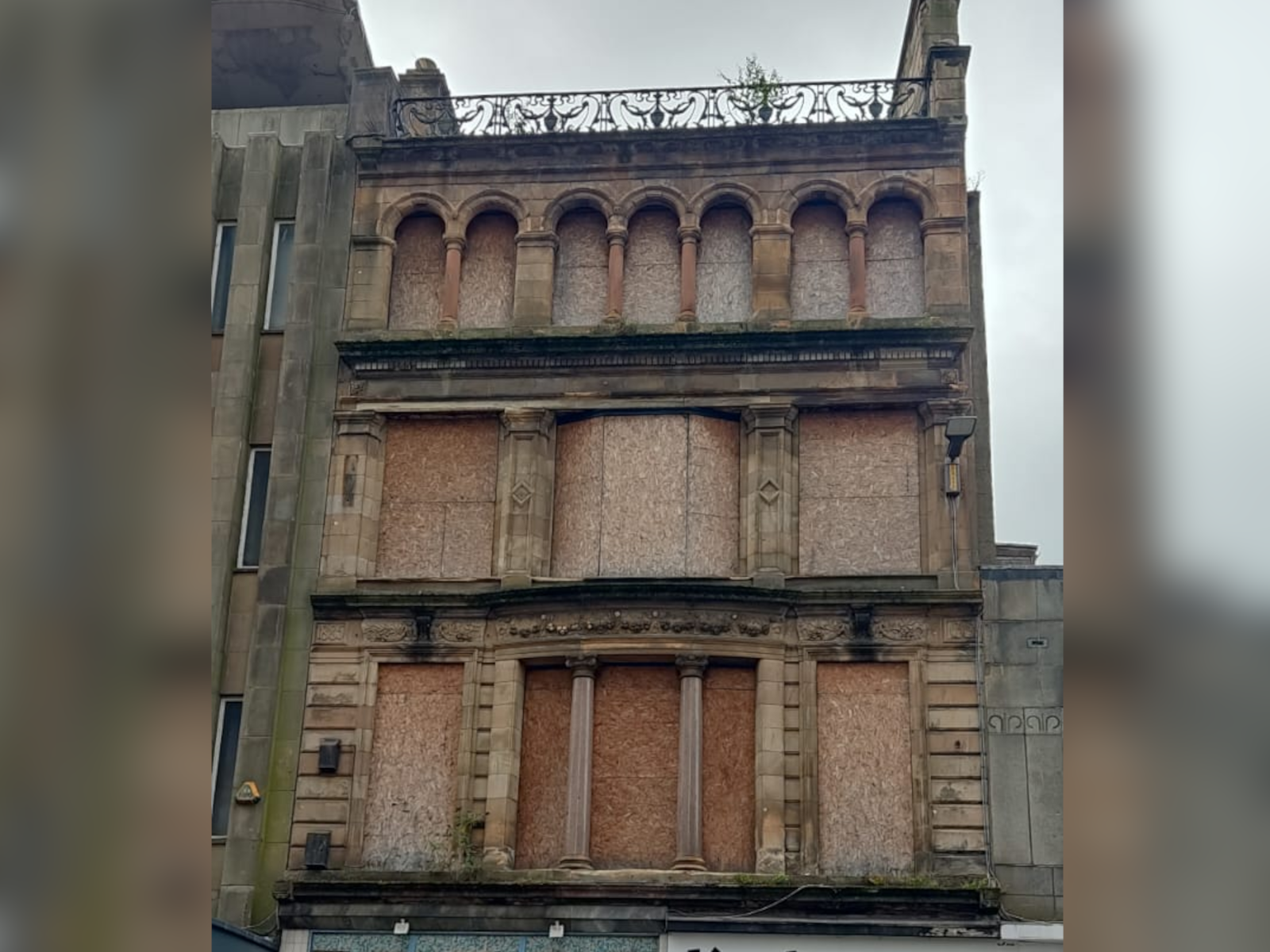
Andy Burnham’s tenure as UK PM hasn’t exactly been a fast take-off. He’s kept many of the more objectionable policies from the Starmer governement and his ministerial appointments have been a mixed bag. His attitude towards constitutional reform has been similarly mixed. On one hand telling English regions that he wants to decentralise the UK, on the other telling them that he’ll centralise that power into the hands of mayors. On one hand telling Scotland that he will not discuss constitutional reform, on the other musing about codifying the UK’s constitution in a way that may give Scotland a codified exit mechanism from our voluntary union….or may make secession explicitly illegal or practically impossible.
He’s made some positive policy announcements though many of them have been cost-free or very inexpensive (at a UK level, anything that costs less than about £1 billion a year is a budgeting rounding error). One of those was made this week and while it’s small, it’s actually pretty good. He wants to make it easier for councils to regulate the opening of vape shops and betting shops so that he can revitalise high streets.
As a policy, it’s fine. Councils should have full subsidiarity over their local planning decisions and that they didn’t was a major oversight. Personally, I’d prefer that addictive products were regulated even further with things like vapes being reclassified as medical devices to be prescribed to those trying to quit smoking or, at the very least, sold in government owned stores the way strong alcohol is in many countries in Europe and elsewhere.
But if we just want to stick with better planning policy, that’s still a positive step. However, if Burnham seriously wants to revitalise high streets then there are other policies he could implement too. And yes, many of the policies I’m going to discuss are devolved issues so if Burnham doesn’t want to do them, Scotland could get on with it in his stead.
1) Redevelop high streets so that there are more people walking around them instead of cars driving through them.
One of the biggest drivers of custom to small businesses in High Streets is the ability for passers-by to just drop in. This is difficult to do if you’re driving past at 30mph and streets simply cannot be made in a way that allows for mass car parking outside the shops. Wherever this has been done, it contributes to lower pedestrian footfall and even fewer customers. Instead, converting roads to pedestrian-only or, at the very least, pedestrian-first streets allows for people to drop in to shops, even those they didn’t come to the high street specifically for.
2) Tax and regulate predatory online platforms like Amazon that push up prices and crush local businesses.
Cory Doctorow has written many times over many years about the predatory nature of online platforms like Amazon. It’s not just the ease-of-use of online shopping that means we don’t need to leave the house any more (believe me...I enjoy that too), but it goes worse than that. Amazon has a history of jacking up platform fees and forcing marketers to pay even more to ensure their product appears near the top of the search list.
Then Amazon copies their product and sells a knock-off version themselves (they can easily undercut on price because they don’t need to pay themselves platform fees, and they can adjust their own search algorithm to ensure that their products always appear top of the list). Worse, they’ve been known to enforce price controls such that if you try to sell your product in your own physical store at a lower price, they’ll kick you off Amazon.
So when you do go into the a shop, you might end up paying a price including platform fees. Rather than making goods cheaper, Amazon makes everything, everywhere more expensive, and then they still rip merchants off and steal their sales. We need to better regulate online platforms and properly tax them. Personally, I’d regulate such that a company that provides an online marketplace cannot also sell their own products on that market. They can either own the market, or they can sell through it – not both.
3) Bring vacant high-street houses back into use.
An interesting fact emerges in our increasing xenophobic politics. It is becoming received wisdom that immigrants are competing for houses and are pushing out native-born families and homeless households. This is, to put it bluntly, total crap. The problems in the housing sector are much more being driven by housing developers who drip-feed construction in order to keep their own profits high.
Another issue though is vacant housing. There are about 7,000 asylum seekers in Scotland right now. There are about 34,000 homeless households in Scotland. There are about 89,000 long term vacant homes in Scotland. This means that if we really wanted to, we could give every asylum seeker in Scotland, every homeless household TWO homes each...and there would still be more than 7,000 empty homes in Scotland.
Many of the empty homes in Scotland are flats sitting above high street shops. These are often cheaper to renovate up to appropriate standards as compared to building a brand new house somewhere – by some estimates, it might be possible renovate three houses for the price of one new one. Doing this would bring people into the heart of the high street and turn them into thriving 15 minute neighbourhoods. This, in turn, would bring entrepreneurs close to their place of work and close to their customers.
4) Pay workers enough and reduce their rent/utility bills enough so that they can afford to shop based on local quality instead of cheapest import.
Have you been feeling the pinch in terms of affordability lately? I know I have (reminder, Common Weal is almost entirely funded by small donations of an average of £10/month). Even where wages have somewhat kept up with inflation, there seems to be some data coming in that there is a shift in what we spend out money on.
This is going to be a bit of a research for me in the near future (right after a slightly different report on affordability currently in the pipeline..and another project that I’ll be talking about soon) but looking at data on what we actually spend our money on appears to be revealing that a greater percentage of that money is vanishing into rents/mortgages and energy bills. It’s no wonder therefore that we have to cut back on “discretionary spending”.
I certainly eat out far less often than I used to. And if we want a high street of local businesses, we can’t assume that they’ll be able to compete on cost with cheap imports. If we want people to buy quality goods or have quality experiences in the high street then we need to pay workers more and we need to aggressively reduce rents and utility bills so that people have more to spend and it doesn’t cost businesses so much to deliver their services.
“High Streets should be the heart of our towns and cities. They should be the places within our 15 minute neighbourhoods where we choose to go for most of our needs.”
5) More low emission zones and re-naturing of urban spaces to make them more comfortable to be in, especially during heat waves.
I was in Glasgow recently for the first time in several months and something struck me – the city was a lot quieter than I remembered. It wasn’t entirely down to reduced footfall either, the volume of traffic in the city was greatly reduced and the noise the vehicles were making was much less too. A good chunk of this is the transition to electric vehicles and legislation like the Low Emission Zone which keeps nosier combustion engines out of the area.
It also makes the air much cleaner. I remember the days working in our office in Union Street (a building that is now sadly lost to the recent fire – see the point above about regulating vape shops) and I remember getting to the end of the day with the rasp in my lungs due to the exhaust fumes. Imagine then living in that space. Air pollution is one of the biggest killers in our society and it makes even visiting a dense area like a high street simply unpleasant to be in at best and an active health hazard at worse. This goes double as the climate emergency bites further and our cities get hotter and more unsafe.
We could revitalise high streets by making them urban oases. We should Green our cities to provide shade, actively prevent heat islands and pull pollution out of the air while at the same time double down on LEZ legislation to reduce that pollution in the first place. Ignore the far-right and other climate deniers who claim to be fighting for ‘freedom’. Their promises to repeal low emission zones should be called out for what they are – policies that will kill thousands of people every year.
6) Create more deconsumerised community spaces.
I want you to think about your local area. Think about a place where you can go where you could: a) Accidentality meet someone you know. b) Stay as long as you like. c) Not have to make a purchase either to get in or once you’re there.
It’s quite likely that the place you’re thinking about is a park (unless you’re in England and it has an entry fee) or a library. It might be a museum. Maybe an art gallery? Might it even be a set of concrete steps? Does your community have any of those kinds of spaces? A major draw to the high street must be to do something other than to spend money.
We should be able to spend time there too, without having to spend money. Whatever the revitalised High Street has – men’s sheds, drop-in centres, community kitchens, art galleries, maker spaces so that locals can make art for the gallery, or whatever – we should be able to enjoy ourselves there in a multitude of different ways.
Conclusion
As hinted above, many of these suggestions are actually issues devolved either to Holyrood or to local authorities so, in Scotland, they aren’t Andy Burnham’s to do. This doesn’t mean they shouldn’t be done though. I’ll even throw in a secret seventh idea – one perhaps a bit more radical as I don’t necessarily approve of the gambling aspect within it.
In 1950s Taiwan where businesses were largely dealing in cash and were hiding their sales volumes to avoid tax, the government brought in an “invoice lottery”. Customers would get a lottery ticket printed on their receipts that would pay out a share of revenue from business rates. Now customers had a vested interest in businesses creating an official paper trail and revenue shot up – more than paying for the lottery. The scheme is still popular to this day.
With efforts to part-devolve VAT to Scotland still underway, perhaps we could do something similar. Perhaps Scottish-owned high street businesses could be registered for a similar state-owned invoice lottery – shop Scottish, maybe win a prize! As I say, I’m not keen on gambling myself, but it might well be a good nudge to choose a local high street shop over a bigger chain, even one next door.
High Streets should be the heart of our towns and cities. They should be the places within our 15 minute neighbourhoods where we choose to go for most of our needs – not just our shopping but to meet people and take part in our community. Letting them rot vacant or, worse, letting them get homogenised under the crushing weight of private equity does us no good as a society or for our economy.
Andy Burnham has started his tenure with a series of small but generally positive steps. He’s going to have to ramp up beyond the small if he wants to get anywhere (hint: calling a COBRA meeting to discuss the English drought and heatwaves and coming out after with a proposal to consider banning disposable BBQs isn’t looking beyond the small) but if he’s willing to make those small steps or even just a large series of those small steps then we could get somewhere positive.
And if he doesn’t, well – maybe Scotland should stop waiting for him to walk and start running ahead instead.
