

This week’s In Common is by Edinburgh College of Arts University and Colleges Union members on why staff walked out of Graduate Show preparations and what the dispute means for the future of art education at ECA.
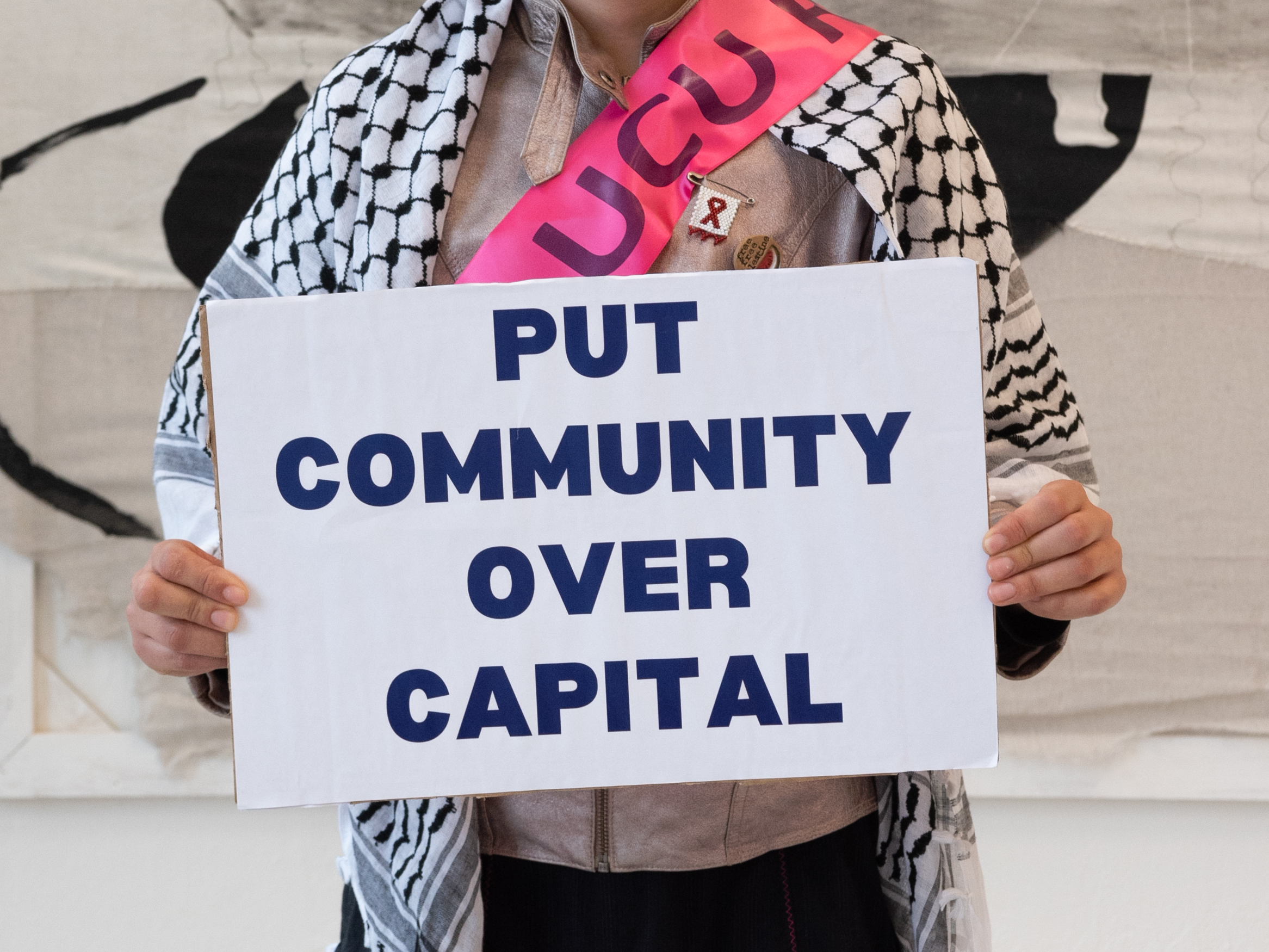
Members of the Universities and Colleges Union (UCU) teaching final-year students at the School of Art at Edinburgh College of Art have walked out of preparations for the annual Graduate Show in protest at the University of Edinburgh’s decision to impose 100% pay deductions on staff participating in a Marking and Assessment Boycott (MAB).
The 100% wage deductions, introduced from May 1, have been described by staff as unprecedented and punitive. One member of staff said: “We do not want to take full strike action, but have been forced by the University of Edinburgh. Never before in the university’s history has a marking boycott resulted in more than a 50% wage reduction. It is unbelievable and has forced us to stop all of our work outside of our marking duties.”
The dispute comes amid proposed university-wide cuts, including £140 million in savings and up to 1,800 job losses.
Students at Edinburgh College of Art have pledged solidarity with staff, with some threatening to boycott the Graduate Show itself, due to open on May 28.
The Graduate Show is one of the most significant annual events in the Edinburgh College of Art calendar, presenting work by graduating students to the public, galleries and potential employers. For many students, the installation week leading up to the exhibition is also a crucial part of the learning process, particularly for Intermedia students whose work continues to evolve through discussion, display and collaboration.
Final-year Intermedia students Selenay Tektunali and Milly Toplis said the cuts were already affecting the educational environment within the art school.
“This affects us too,” they said. “When staff are overworked, the quality of teaching changes. It becomes harder to keep the strong and caring community that art school depends on.
“As students at the University of Edinburgh, we stand with our tutors. We want a system that values people, supports fair working conditions, and protects the community we are part of.”
Staff argue that planned staff reductions are the latest stage in a longer process of restructuring dating back to Edinburgh College of Art’s merger with the University of Edinburgh in 2011.
One Edinburgh College of Art staff member said the school was already under significant strain following previous redundancies. “We lost so many staff last year to redundancies,” they said. “Our department is at a breaking point, and now they want to cut more.”
One staff member described tutors being routinely double-booked across courses, with assessment periods stretched over weeks because of staffing shortages.
“Student-to-staff ratios have changed dramatically,” they said. “The disappearance of co-teaching has had a huge impact, especially in large tutorials, workshops and presentations.”
They also described growing pressure on space and resources within the school, with “no contingency allocation in space and staffing left in the system”.
Staff say the art school continues to produce ambitious and high-quality work, but that this increasingly relies on lecturers absorbing heavier workloads and giving additional time beyond their formal duties.
Some students have also discussed boycotting the Graduate Show in solidarity with staff.
One tutor described the degree show preparation period as “by far my favourite part of the job”, saying much of the work by students is only fully realised during the final days before the exhibition.
“The conversations around selecting work and decisions around display are often some of the most nuanced parts of the marking process and ultimately the finished work,” they said.
Staff say much of the educational value of the Graduate Show lies in the conversations, mentoring and collaborative decision-making that happen during installation week.
“It’s the culmination of four years of learning and co-creation and the most important point in the art school experience,” one staff member said. “Any artist you meet will have stories from their degree show and who showed up for them at that vulnerable time. We show up for students when it matters most.”
Tutors say they are particularly worried about the impact of the boycott on vulnerable students and those requiring additional support.
“I know most of the students will have supported each other to get their fantastic work up,” one tutor said. “But I am particularly concerned about some of our more vulnerable students with specific access needs who require a lot more assistance from tutors who know them at this time.”
In a statement, the University of Edinburgh said it was “deeply disappointed that UCU Edinburgh members have again voted in favour of deliberately and overtly targeting our students with a marking and assessment boycott”, adding that the action would “add to the strain on our students during an already challenging and important time”.
The university said participation in a marking and assessment boycott constitutes “partial performance of duties” and that it “does not accept this partial performance of the contract and has decided to withhold 100% of pay”.
A UCU member in the School of Art said the dispute was ultimately about the future of art education itself.
“We are not just fighting for our jobs and the jobs of our colleagues but for the whole experience of being at an art school,” they said. “It’s being eroded, fast. If we allow ourselves – and how we teach – to be shaped into something manageable and conformable so that it can be delivered as cheaply as possible, will it still be worth having?”