

Terrorists, troublemakers, and the winners of history
The Court of Appeal may have upheld the proscription of Palestine Action, but the wider debate is far from over. This ruling raises uncomfortable questions about how democracies define terrorism, tolerate dissent and remember the disruptive movements that later become part of the national story.
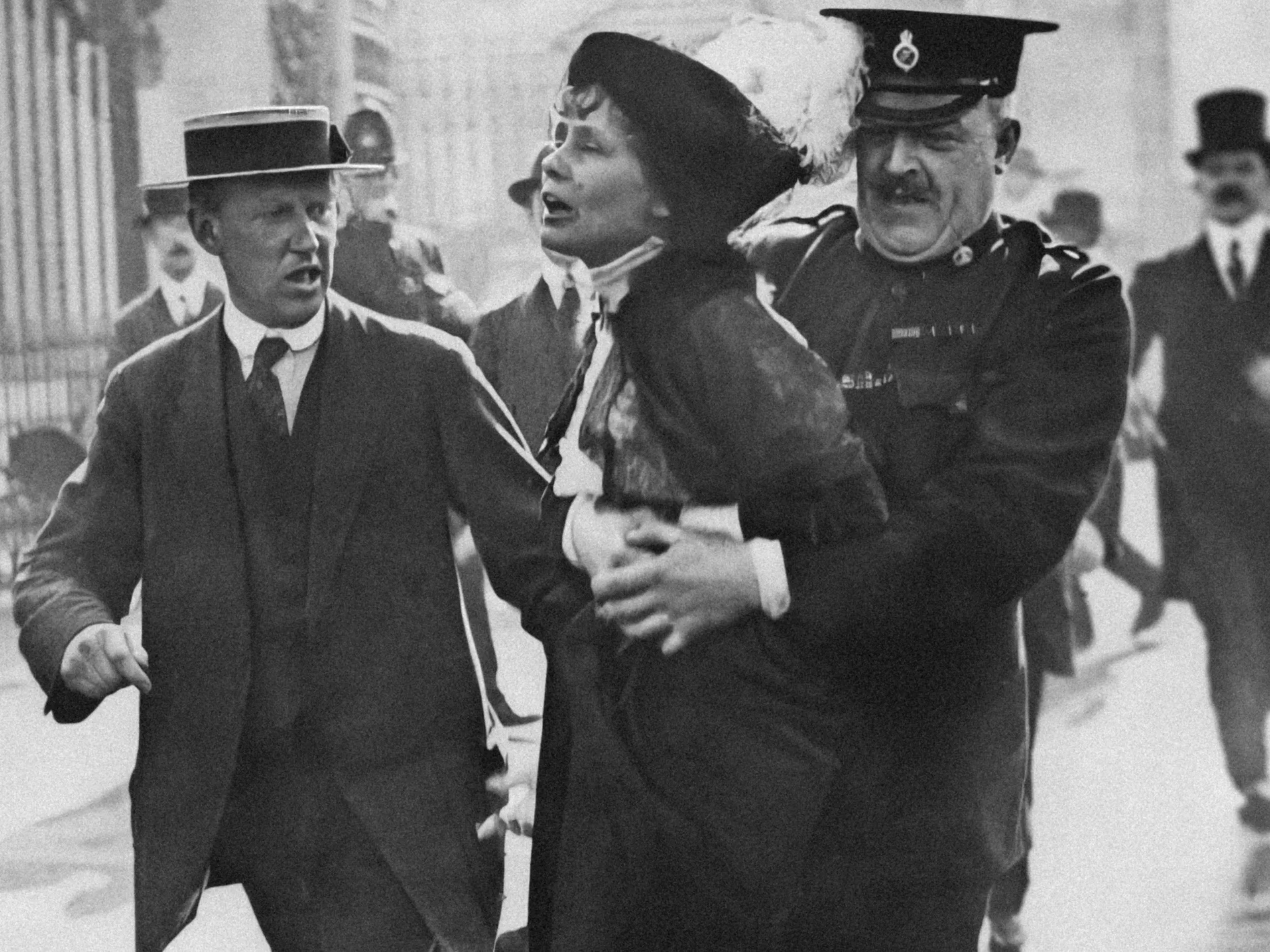
The Court of Appeal’s decision to uphold the proscription of Palestine Action has been treated by many as the end of an argument. The law has spoken. The judges have ruled. The matter is settled. Except it isn’t.
The legal question before the Court was relatively narrow: whether the Home Secretary’s decision to proscribe Palestine Action as a terrorist organisation was lawful and proportionate. The Court concluded that it was. Under the definition contained in the Terrorism Act 2000, the group’s actions involved serious property damage, carried risks to public safety, and were undertaken for a political cause. According to the Court, the legal threshold was met. That is the law as it currently stands.
But law and politics are not the same thing. Nor is legality the same thing as legitimacy. The more interesting question raised by this judgment is not whether Palestine Action falls within the statutory definition of terrorism. It is what that definition tells us about the way democracies understand political change. Because hidden within the judgment is an argument about history itself.
The judges rejected comparisons between Palestine Action and the suffragettes, describing the latter as a movement that operated transparently and openly, unlike Palestine Action’s covert cell structure. On one level, this distinction makes sense. Palestine Action does organise through decentralised networks. It does deliberately seek to avoid disruption by law enforcement. It does encourage activists to take direct action against property associated with the arms industry. But the historical comparison quickly begins to wobble.
The suffragettes were not simply a polite pressure group holding meetings and writing letters to MPs. They chained themselves to railings. They disrupted political events. They smashed windows. They carried out bombing campaigns and acts of arson. They destroyed property. They operated covertly when circumstances required it. They actively sought to make normal politics impossible to ignore. Today, they are remembered as champions of democracy. At the time, they were regarded by many as dangerous extremists.
History has a remarkable ability to tidy itself up. Once a movement wins, we remember its moral purpose and forget its methods. We remember the destination and sanitise the journey. The rough edges are sanded down. The disruption becomes ‘campaigning’. The militancy becomes ‘activism’. The people once denounced as dangerous radicals are transformed into national heroes. The suffragettes are not unique in this regard.
The anti-apartheid movement was condemned for years by political leaders across the West. Trade unionists were branded agitators and extremists. Civil rights activists were accused of disrupting public order. Anti-colonial movements were routinely dismissed as criminal enterprises before later being recognised as liberation struggles. This is not an argument that every disruptive movement is therefore justified. It plainly is not. Nor is it an argument that every act of sabotage or property damage should be tolerated in the name of political conviction.
But perhaps the more important lesson from the suffragette comparison lies elsewhere.
When Baroness Brenda Dean defended the suffragettes against modern accusations of terrorism, she did not deny the militancy. She did not pretend that windows had not been smashed or buildings had not been burned. Instead, she argued that their actions had to be understood through the prism of the world they inhabited. Women were excluded from formal political participation. Their demands were repeatedly ignored. Conventional avenues of influence were largely closed to them. "These were pretty desperate measures by people in a desperate situation," she argued.
Whether one agrees with that assessment or not, it raises an uncomfortable question. If historical movements are entitled to the context that produced them, why should contemporary movements be denied the same consideration?
Palestine Action did not emerge in a vacuum. It emerged after decades of failed diplomacy, expanding settlements, repeated military offensives, and a peace process that many observers regard as effectively dead. It emerged after years of protest, petitions, lobbying campaigns, marches and appeals to international law that activists believe have produced little meaningful change.
That does not automatically justify sabotage. It does not exempt activists from the law. But it does require us to acknowledge the political conditions that produced the movement in the first place.
The irony is that Britain itself is not an external observer to this history. The Palestinian question is not simply a foreign dispute unfolding elsewhere. Britain governed Mandatory Palestine for almost thirty years. Britain played a central role in the political arrangements that accompanied the end of that mandate and Palestine’s sovereignty. Britain's fingerprints are all over the history of the region.
That history does not make Britain responsible for every subsequent development. But it does make it difficult to pretend that Palestine is somebody else's problem. The instability, dispossession and conflict that followed did not emerge from nowhere. They emerged from a historical process in which Britain was deeply involved.
Rather, it is an observation about the strange relationship between democracy and dissent. We often tell ourselves a comforting story about how change happens. Citizens identify a problem. They write to their representatives. Campaign groups raise awareness. Public opinion shifts. Governments respond. Progress occurs.
Reality is usually messier. Major political change rarely emerges from polite consensus alone. More often, it arrives through conflict, disruption and pressure. Existing institutions resist. Entrenched interests push back. The political cost of maintaining the status quo must somehow be increased before meaningful reform becomes possible.
“The history of democratic change is not a history of order. It is a history of managed disorder. ”
The history of democratic change is not a history of order. It is a history of managed disorder. This is where the Palestine Action debate becomes genuinely interesting. Supporters of the ban argue that damaging military aircraft, breaking into facilities, and sabotaging property cannot simply be excused as a protest. They point out that actions creating risks to workers, emergency services, or members of the public cross a line that democratic societies cannot ignore.
There is force in that argument. But opponents ask a different question. If disruption aimed at property is now terrorism, what forms of effective direct action remain available? The Court repeatedly reassures readers that protest itself remains lawful. Demonstrations remain lawful. Campaigning remains lawful. Criticism of Israel remains lawful. Yet history suggests that governments are often perfectly capable of ignoring lawful protest. People tend not to remember the countless peaceful demonstrations that changed nothing. They remember the moments when ordinary politics stopped functioning normally. The moments when disruption became impossible to ignore.
This does not mean violence is effective. In fact, history often suggests the opposite. Violence directed against people frequently damages political movements more than it helps them. Public sympathy evaporates. Support collapses. Governments gain justification for repression. But disruption and violence are not synonymous. The suffragettes understood this. Trade unionists understood this. Anti-apartheid activists understood this. The question has never simply been whether disruption is acceptable. The question is how much disruption democratic societies are willing to tolerate before they begin to view political opposition as a security threat.
That question becomes particularly uncomfortable when viewed through the lens of Palestine itself. For decades, Palestinians have watched diplomatic processes fail repeatedly. International law has been invoked selectively. United Nations resolutions have come and gone. Civilian casualties have mounted. Settlement expansion has continued. Expressions of concern have multiplied while meaningful intervention remains elusive. Whether one supports Palestine Action or not, it is not difficult to understand why some activists have concluded that conventional politics is no longer producing results.
The state’s response has been to increasingly frame such activism through the language of extremism and security. Perhaps that response is justified. Perhaps it is not. But it should at least force us to confront a broader question. How many of the movements we now celebrate would survive today’s definitions? Would the suffragettes? Would anti-apartheid campaigners? Would some of the more militant wings of the labour movement? Or would they too find themselves categorised as threats to public order and national security?
These questions are glaring because democracies do not simply govern through elections. They govern through narratives. They decide which forms of dissent are legitimate and which are not. They decide which disruptions are remembered as necessary and which are condemned as dangerous.
The difficulty is that these judgments are rarely consistent in real time. The winners of history are almost always granted a retrospective legitimacy that they did not enjoy when they were actually fighting. That is why the Palestine Action ruling matters far beyond Palestine Action itself. It exposes an enduring tension at the heart of democratic politics. We celebrate the disruptive movements that transformed society yesterday while becoming increasingly uncomfortable with disruptive movements operating today.
The result is a paradox. We admire those who challenged power in the past, but expect those challenging power in the present to do so politely, invisibly, and within boundaries that power itself defines. History suggests that political change has never worked quite that way.
And perhaps that is the most unsettling lesson hidden within the Court of Appeal’s judgment. Not what it tells us about Palestine Action, but what it reveals about our collective memory. We remember reform. We forget disruption. We celebrate the victories. We erase the struggle. Then we wonder why the next generation refuses to stay within the lines.
