

Guest writer Henry Mathias explores the widespread use of glyphosate in UK agriculture and public spaces, questioning its environmental and health impacts and calling for greater scrutiny as the UK considers renewing its licence.
Walk into any supermarket or garden centre just now, and you’ll be faced with a wall of green. All that overpriced firewood was replaced by the ubiquitous weedkiller, Roundup. Those serried ranks of green bottles look so innocent, helping us round up all those pesky weeds at this time of year. The ultimate greenwash.
What’s not being advertised is that Roundup’s active ingredient is glyphosate, a herbicide so effective it kills every plant in its path. Legal proof that glyphosate causes cancer remains elusive, but meanwhile, the payouts speak volumes. Back in 2018, school groundskeeper Dewayne Johnstone was the first to receive a court payout, and earlier this year Bayer offered £5.35 billion to settle outstanding lawsuits against its Monsanto subsidiary in the US. Aye, £5.35 billion.
The tell-tale yellow lines can be seen here in East Lothian, fringing every pavement, and, for the Roundup rounds, staff have taken to medicating our town using shiny quad bikes rather than traditional backpacks, despite the council’s commitment to reduce glyphosate use. The zero-tolerance approach to the wildflowers that are deemed as weeds even extends to green spaces.
So, how about your patch? Your council might not agree to stop spraying outside your house, but there’s a lot of point in asking. According to the Pesticide Action Network (PAN), some UK local authorities are following France and Germany in banning urban herbicide and pesticide use altogether. For example, of the 90 per cent of UK councils responding to the PAN survey, nearly half have stopped spraying their playing fields, a third their cemeteries and just over a quarter their parks and green spaces.
I had heard that glyphosate was dividing the European Union, and I guess it’s unsurprising that the UK is so much on the wrong side of the curve. But what gets under my skin are recent studies showing just how pervasive this poison has become. A couple of years ago, the indomitable Wild Justice asked its UK supporters to ‘take the p*ss’, and the resulting urine tests found everyone had high traces, city and country dwellers alike.
In the US, agricultural use is higher partly because some core foodstuffs (including wheat, oats, corn and soy) are allowed to be genetically modified to be resistant to glyphosate, so they can take more spraying, including just before harvest. The US Centre for Food Safety is finding ever higher levels creeping into food, a reflection of the Environmental Protection Agency allowing increased glyphosate residues for human consumption. The people with the most intimate knowledge of the environment, First Nation communities in the US and Canada, report that glyphosate is seeping into their lands and they can taste and smell it in everything. They’re calling for a complete ban on glyphosate because of its effect on the berries, animals, medicines and fish that make up their traditional food systems.
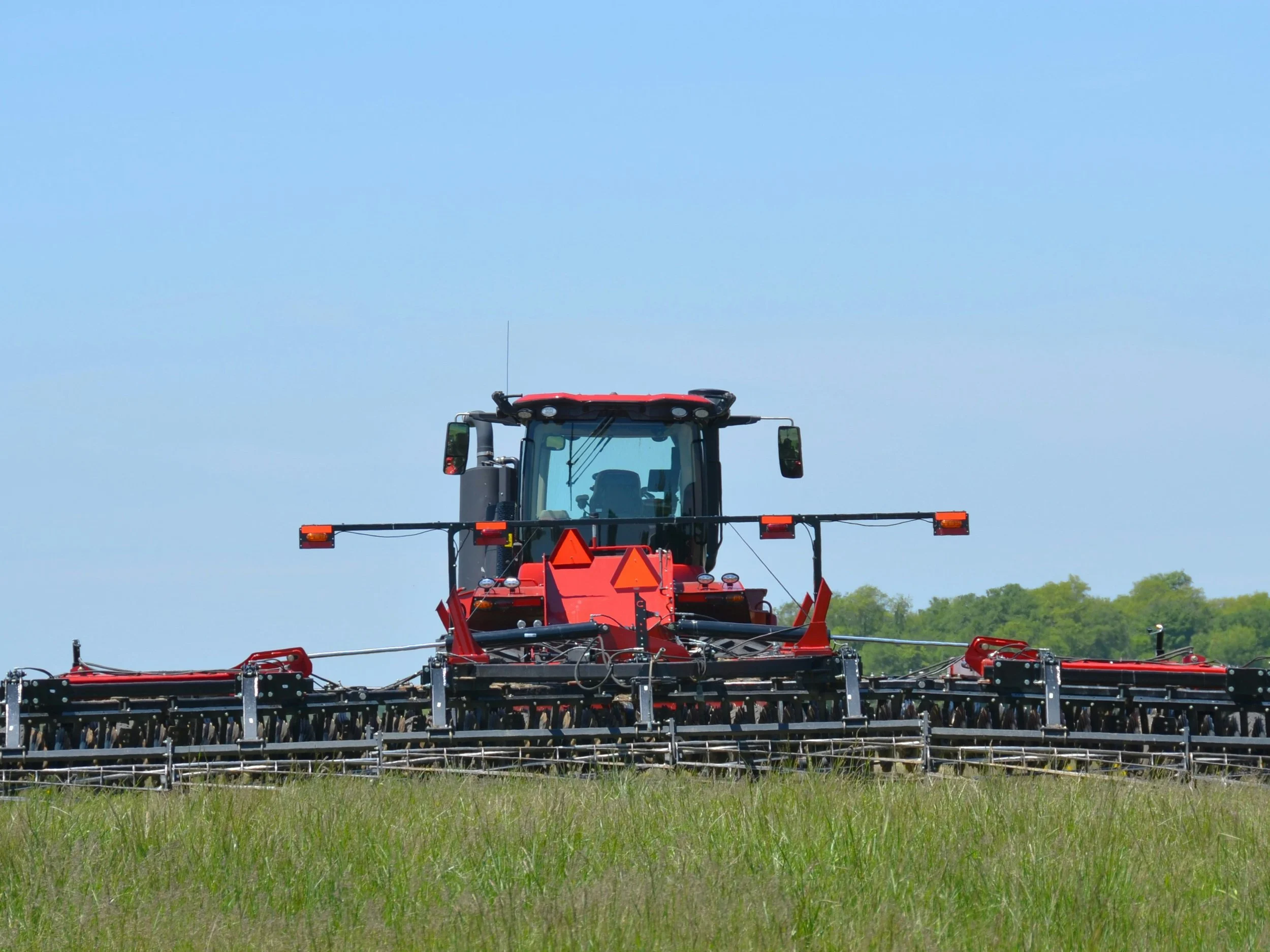
Here in Scotland, with our relatively damp weather, farmers are apparently heavily reliant on glyphosate for drying out wheat and other cereals, more than other parts of the UK and Europe. The NFU successfully lobbied to remove the red tape preventing pre-harvest spraying, and PAN reports UK farmers using 1000% more glyphosate than in 1990. Glyphosate is also routinely used by the forestry industry in Scotland against competing vegetation, which partly explains why all those Sitka spruce plantations are quite so eerily dead and depressing. And then there’s the golf courses…
The plot thickened this January, when a PAN study of swabs and soil samples found that over half of the 13 playgrounds they tested in Kent, Cambridgeshire, Milton Keynes, Tower Hamlets and Hackney were contaminated. Significantly, the only area with no trace of the herbicide was Hackney, which went glyphosate-free in public green spaces in 2021. Go Hackney!
According to PAN’s Nick Mole: “We all know that young children tend to put their fingers and other items in their mouths, so finding glyphosate residues in playgrounds, including on play equipment such as swings and slides, is particularly worrying.”
“Babies in those counties dominated by sprayed GMO crops weighed on average 30 grams less than those born in counties that mostly grow crops not sprayed with glyphosate”
The relative lack of research about the impact of glyphosate on children is telling in itself. Given what we already know about the increased susceptibility of children to toxins in the environment – their developing organs, having relatively greater and closer contact with the ground, and higher rates of metabolism – findings from the limited available evidence should not come as a surprise. US studies found glyphosate in urine samples from children, and values exceeded those measured in adults when the corresponding values were available (within and outside agricultural communities). Relatively higher levels were also found in children whose parents sprayed the backyard.
One large US study looked at data on over 10 million babies born between 1990 and 2013 in rural counties and compared this to rates of glyphosate use. Before glyphosate spraying of GMO crops was introduced in 1996, there were no measurable differences between counties. But by 2005, babies in those counties dominated by sprayed GMO crops weighed on average 30 grams less than those born in counties that mostly grow crops not sprayed with glyphosate. Although this study showed a correlation rather than proving cause, babies were also born an average of 1.5 days earlier where glyphosate use was common.
Levels of glyphosate and disadvantage go hand in hand. The large US study found that historically disadvantaged communities experiencing greater impact. In Brazil, where the use of glyphosate is twice that of the US, two studies in 2023 found higher rates of infant mortality and childhood cancer. This suggests a correlation between glyphosate use and disturbing health trends. Michael Antoniou, Professor of Molecular Genetics at King’s College London:
“Our studies have shown that exposure to glyphosate herbicides is a significant risk factor for the development of a range of serious health conditions, including fatty liver and kidney disease and, most worryingly, a wide range of cancers, including leukaemias. The assertion by government regulators that glyphosate is safe does not stand up to the latest scientific scrutiny, which shows that a safe dose of glyphosate is, at present, unknown. Thus, all efforts should be made to reduce glyphosate herbicide use in both agricultural and urban settings, and to eliminate unnecessary routes of exposure, especially for children.”
Delving deeper, the glyphosate story gets more sinister still. So, why would the US Government last month take the unusual step of compelling the production of glyphosate in the interests of national security? Disturbingly, the answer looks like it’s not just about domestic food production and may lie in the recent carpet spraying of farmland across swathes of Southern Lebanon and the military use of white phosphorous.
In the UK, we’re only dealing with well-intentioned use of glyphosate on our streets, fields and forests. Persuading our central and local government to reduce or ban glyphosate should be straightforward, given the international direction of travel, but campaign groups speak otherwise. The UK Government is deciding whether to renew the license for glyphosate later this year and intends to consult the public in June, which presents us with an opportunity. Is it also maybe time to enlist the help of our best friend? Like children, dogs keep themselves close to the ground and are especially vulnerable to glyphosate poisoning. Consequently, US vets are increasingly speaking out, advising against any domestic use of glyphosate. Over here in the animal-loving kingdom, will it take the demise of one high-profile celebrity dog before any action is taken?
So, are we glyphosatiated yet? I think that plenty of parent and pet-parent power will have to be exercised before the UK concedes it’s had enough. Let’s look after that precious but precarious skin of soil in the same way it looks after the earth and its inhabitants.
****************************