

Perhaps Scotland should take the dirty road
What if Scotland is deluding itself about its current state of development and what if countries we consider below us are more realistic? Does it suggest that we should take a less formal approach to solving our problems?
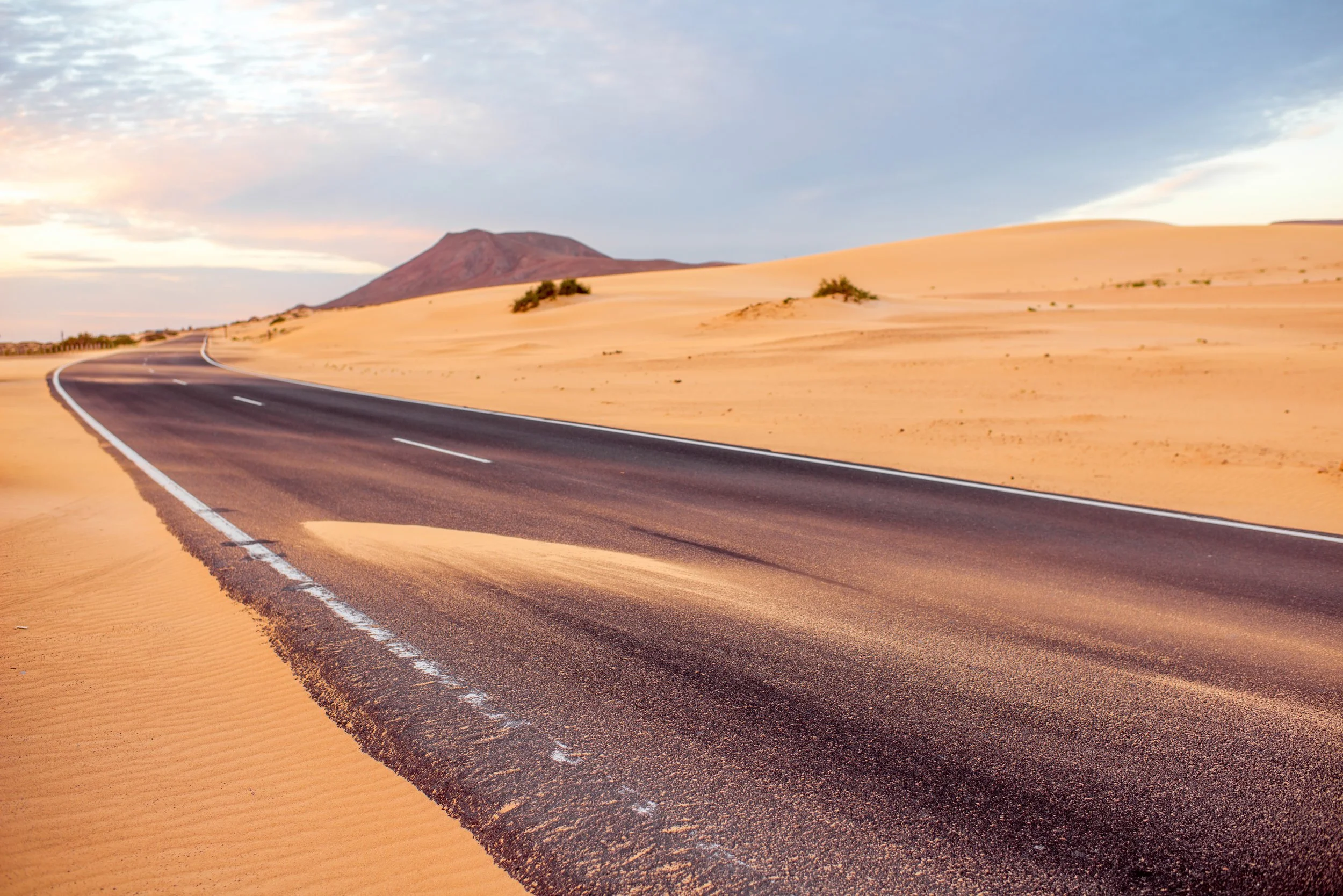
The road from Aswan to Luxor is brutal. Winding through the fringes of the Western Desert it is a rough, potholed, five-hour slog in heat that (in July) never drops below 40 degrees in the day and regularly surpasses 50.
On a family holiday we do not understand what the guide is offering us - $80 to make the journey, one we have already paid for. He explains; 'you've paid for the standard shuttle which will take more than five hours and we can get your there air conditioned in three'. Honestly, I still didn't understand.
So when our driver tells us that we must close all the curtains, we don't know what's going on. “We're taking the dirty road” he explains. So what, we're not meant to see an unclean desert? What is going on? Then we hit the road and it suddenly becomes clear.
The old Aswan-Luxor road is not fit for purpose. It has fallen apart. We experienced this in some other roads in the desert – it is a slow journey that weaves past potholes, unsurfaced areas and sections so dilapidated everyone drives off the road anyway. And they are building a new road – but it isn't finished.
This becomes clear on the approach – it is a slow mile or two because it's still little more than compacted aggregate with no sign of tarmac. Then the curtains become necessary – because we bribe the guards who let us on the finished stretch of the road. This happens twice more – we close the curtains, reach a checkpoint, pay a fine and move on. With a fifteen minute stop in a cafe on the way, we make it in a comfortable three hours.
That's what the 'dirty road' is, and if my first instinct isn't exactly positive about what this says about Egypt, it didn't last. Egypt isn't Britain and the Western Desert isn't the M8. The state of development is where the state of development is and despite its unpleasant dictatorship, it is building infrastructure (a little too quickly in some places where they are destroying communities).
So what is the solution? The dirty road is hardly only being used by us – it is as busy as any road I saw outside Cairo. As far as I can tell, almost the whole freight industry is using it, as are most of the tour operators and plenty others. It's not even just about time; our driver explains that he won't take the 'clean' road because of the damage it does to his minibus.
This system is corrupt and unfair – and it works. In this context, fair and honest is patently worse. It took me very little time to come to the conclusion that this was indeed the right solution. And in that amazing, dramatic three-hour journey through a parched landscape I found myself asking a rather troubling question:
Is it time for Scotland to start taking the dirty road? If 'the best thing from here' for Egypt is to turn a blind eye where things are failing if 'the other approach' works better, what about Scotland? How realistic are we being about 'from here' in Scotland? Are we where we think we are? Colour me sceptical.
Now before I go on let me give you a warning; once you normalise corruption (and particularly transactional corruption), it can be a Djinn that can be hard to put back in that bottle. As I keep repeating over and over, corruption isn't a hole in your vessel, it is rust, a phenomenon which is eating away at the fundamental fabric of the bucket itself.
When you can make money out of corruption (like creating a bonus culture in the public sector that benefits you, or inflating salaries, or organising Golden Goodbyes for yourself, or paying McDonald's prices for an exclusive luxury meal, or using public money to send yourself on expensive and unnecessary jaunts to the US), it never goes away.
If the other guy can stuff his pockets, why shouldn't you? It's a contagion that has spread right across Scotland's ruling classes and it is out of control. But there are other kinds of 'blind eye' which achieve something else. The first rule is that those turning the blind eye must never achieve personal gain from it. The second is that it much solve a problem that hasn't been solved through conventional methods.
We already have an example in Scotland – the drug consumption rooms. Everyone knows that what is taking place in one of these facilities is illegal and everyone knows we're turning a blind eye to it, but as we now know, the alternative is almost certainly worse.
And drugs is a good place to begin with understanding how this mindset could operate. I don't write enough about organised crime, in part because I really don't know enough of the detail. But I can tell you this; it is destroying communities. In particular, if you move out of comfortable suburban Scotland there is a good chance you will become aware of changes in organised crime.
There is nothing noble about Scotland's organised crime, but mostly in comparison to the larger and more dangerous County Lines organised crime operations, it is limited. Most of professional Scotland knows little or nothing about this. 'Traditional' local drug dealers who mostly stayed in their own communities are being challenged by much bigger gangs from elsewhere.
The model is to hook particularly men with cheap cocaine (another factor that escapes much of professional Scotland is that it is cocaine which is destroying working class communities now, and it looks very different to professional Scotland's own extensive cocaine habit).
Then you let them build up debt, and then you control them, either upping the debt further, recruiting them to work for you or even by simply turning up at the house and taking their possessions.
“Perhaps it is time to stop pretending we’re nearly there, that we’re a sophisticated and advanced society in areas where we quite clearly aren’t? ”
It made me think immediately of Hamsterdam. If you've not watch the peerless TV series The Wire then you should. I think the third season may be my favourite. A good, close-to-retirement cop can't take it any more. He knows the 'war against drugs' has been lost. So he tells all the local dealers that there is one specific (mostly abandoned) street he will not police.
So long as no-one comes out dead and so long as nothing happens outside that street, he will turn a blind eye. He explains that it is like 'Amsterdam', which one of the young dealers mishears and so sprays 'Hamsterdam' on the wall. It works. Crime is contained, it stops a social contagion, prevents innocents from being drawn in and above all it causes the wider crime rate to plummet. I won't spoil what happens next.
Since being on the dirty road I cannot see why we shouldn't go to every affected community and tell those involved in drug dealing that there is a vacant shop and that anything that happens in that shop will be ignored, on condition that there is no violence and no dealing or enforcement outside that shop, and that all the energies saved will go into pursuing other organised crimes like people trafficking.
How could it be worse for these communities? Could it not be better? Would it not be better? Why is relentlessly pursuing a policy everyone and their dog knows isn't working better than trying a bit of a blind eye for a while?
There is an awful lot of Scotland which isn't working half as well as we pretend. I am still stuck by an ex-addict who is now a drug councillor who I met and explained to me in detail how much paperwork he had to do to take his recovery group to play badminton. He was a trained professional. The minibus driver was a trained professional. They were playing in a local authority facility.
What was the point of the (very extensive) risk assessment report he had to submit? Why did he have to do it every time? How did any of this make sense? Interestingly, the event at which he told me this included everyone from frontline workers to senior council officials. Almost all of them told me the same thing – we only do this because the tier above us requires us to do this.
What if people just started to agree not to look too closely at these assessments and ticked the box anyway where discretion made this make sense? We're not 'almost nearly' at a point where we can pretend the public sector is working properly. What if we stop pretending?
What about our economy, owned overseas and extracting our wealth? What if we stopped our dual practice of shouting about everything in press releases and fetishising obeying the stupid rules on state aid and so on? What if we just got on with something else not entirely within the (bad) rules, quietly and effectively?
I'm thinking about ways to get public support to Scottish businesses via means that would be challenged under the Single Market Act if we publicised it. What if we didn't publicise it until after it had worked? What if we just did it?
Let me be clear, none of this is the ideal solution. It would be better if this was all policy, legislated for by a government with a clue what was actually going on in Scotland. But we don't have that government just now, and what we have is a ludicrously bumpy road for anyone trying to do anything useful in this country.
Perhaps it is time to stop pretending we're nearly there, that we're a sophisticated and advanced society in areas where we quite clearly aren't? What I can tell you is that for a very wide range of reasons I have come back from holiday with a renewed vigour and a stronger determination to do something to try and break this stupid paralysis that Scotland finds itself in.
Perhaps it would free us if we simply accepted the reality of where we are and acted accordingly. Pretending a road that is barely passable is 'clean' because it obeys a set of rules which themselves are failing may not be the direction we should be going.
I don't know. I just know that it all left me feeling like Scotland is well dressed only if you accept the emperor's word for it. One way or another, Egypt solved the problem of an impassable road. What exactly is Scotland solving right now? Perhaps we should drop our opinion of our own probity and sophistication for a second and contemplate getting our hands a little dirty.