

The economic case for renewable energy is now unstoppable
While the environmental case for renewable energy has been clear for decades, the economic case for investing in renewables to the exclusion of fossil fuels has now been decisively made.
Last week, I watched a video essay on Youtube that cemented a thought I’ve been having for a while about the renewable energy transition. The channel – Technology Connections, created by Alec Watson – is known for doing deep dives into how technological appliances around us actually work and the history of how they were developed.
If you want to know why you’re putting too much washing powder in your dishwasher, or why Americans don’t use kettles, or why you’ve never heard of the RCA Selectavision that completely failed to bring us home movies on vinyl discs, then there are videos there for you that will take you far deeper into those topics than you thought possible.
Recently, he published a video that, I think, makes the best case I’ve seen so far for convincing an average person or even a climate-skeptic that the renewable revolution is now not just unstoppable but that it should be actively pushed along even to the exclusion of investing in other forms of energy especially fossil fuels and that anyone telling you otherwise either hasn’t woken up to the reality of the changes that are happening or they have a direct and probably financial interest in opposing them. You can and should watch the video below.
Some of the essential points from the video are probably common knowledge to the folk reading this article but even for me (who helped write a book on a Green New Deal for Scotland) having some of them restated and updated was vital for my own understanding.
One of the most important is that fossil fuels can usefully be reframed as “disposable fuel”. Every barrel of oil extracted from the ground can only be burned once (barring technologies that draw CO2 from the air or water and convert them back into fuels but those technologies are not solutions to the climate emergency).
This realisation radically reshapes how we think about the resources we need to extract and process for the renewable transition. It’s easy to look at the amount of metals, glass, rare-earth elements and other materials required to build everything and baulk at the challenge or to outright reject them on the basis of the damage caused by the mining.
These worries are important and must be minimised but the mining required for renewable technology does not exist in a vacuum. Every MW of renewable technology that displaces a MW of fossil fuel technology reduces the need for more fossil fuels which, as mentioned, can only be burned once.
By contrast, the renewable technology materials are not burned up in the process of generating energy. A solar panel deployed today will, using no additional materials, still be producing electricity in 20 years time.
The materials for renewables are also highly recyclable. Lithium mining is hugely destructive and there are very good reasons why countries are moving to reduce lithium dependence (Scotland has little lithium but plenty of sea water from which we could extract sodium for batteries which would allow us to reduce dependence on undemocratic regimes like China or the US for our energy tech) but even if we never invented a better battery than lithium, the amount we actually need to mine is going to reduce sharply as recycling rates ramp up (something they haven’t done much so far because the first generation of mass lithium batteries such as those in EV cars and homes have not year reached their end-of-life).
To illustrate, let’s take a hypothetical example. Let’s assume that a gas-fired generator requires 100 tonnes of gas every year. Let’s also say that the same amount of energy can be produced by solar panels and stored in batteries to ensure 24/7 demand coverage using 100 tonnes of lithium. The gas can only be burned once, but the lithium battery will last 10 years and can be recycled with 90% efficiency (both of those numbers fairly underestimate current battery performance). We’ll ignore all of the other materials that go into extraction, processing and transportation for the moment (though it’s worth noting that around 40% of ALL global shipping consists of moving fossil fuels from place to place)
By the end of year two, we will have burned 200 tonnes of gas, but will still be using the same 100 tonnes of lithium. On year nine, we’ve burned 900 tonnes of gas and are still using the same 100 tonnes of lithium. On year ten, we need to replace the battery, but we don’t need to mine another 100 tonnes of lithium because we can get 90 tonnes from recycling the old battery and another 10 tonnes from the ground. The same goes in year 20 where just over 80% of the “new” batteries consist of recycled rather than mined lithium. Once we’ve completed the renewable transition, the richest “mine” of materials for new batteries will be old batteries just, as the video points out, as is currently the case with lead-acid car batteries.
Fast forward 300 years. Around 5% of a “new” lithium battery was mined on day one of this experiment. Around 400 tonnes of lithium have been mined to supply the batteries for this project. Meanwhile, around 30,000 tonnes of gas have not been mined, burned and injected into the atmosphere. In terms of tonnage of these two materials, while 400 tonnes of lithium is a significant amount, replacing our hypothetical gas generator with solar panels and batteries has in fact greatly reduced total mining impacts.
“The only people who claim that we need more fossil fuels are either unaware of the facts of their argument or that they are lying to you”
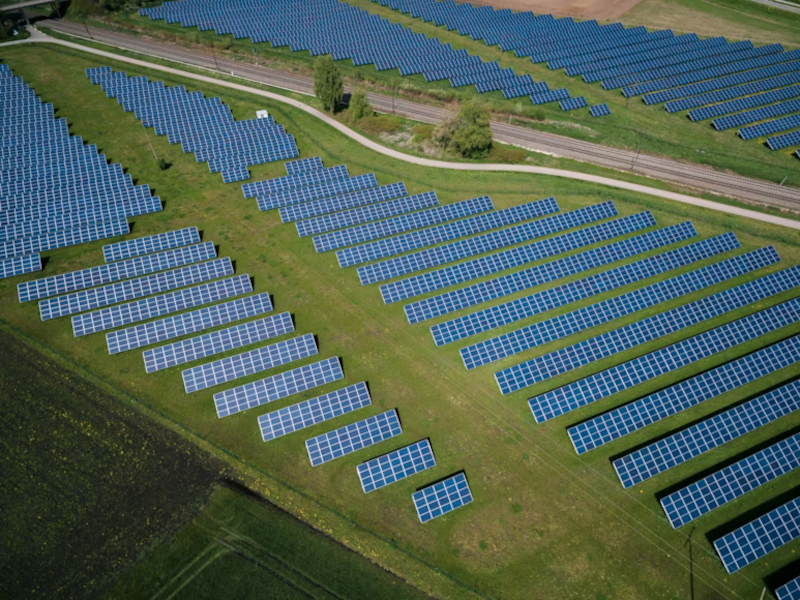
The other major piece of information that landed home to me is more particular to the US but still holds lessons for Scotland. One of the arguments used against renewable energy is that it uses so much land compared to fossil fuels or nuclear power. This is true, but if the US took all of the land that it currently uses to grow corn not for food but for biofuel for cars and converted it to solar panels and batteries (and even if we ignore the potential of continuing to farm under and between the panels if you design things right) then the US could produce almost double its electricity needs even after the cars are converted to electric vehicles.
(Note: As we state in our Common Home Plan, biofuels have their place in a post-fossil future, but should be mostly used as chemical feedstocks and emergency backup fuels rather than for everyday vehicles and using food-grade corn for this purpose is just about the worst way to make biofuels – the US only does it because the strength of the Corn Lobby).
But, I hear some say, haven’t I complained about mass solar farms in the past? Yes I have. The difference is that my complaints about the proposed solar farm on my doorstep are less about the presence of them (though many in my community are so concerned) but more about ownership and community benefit (the French owner of the developer and the German bank financing them will earn far more than the landowner who will earn far more than the rest of the community as a result of the project).
Instead, I want to see Scotland’s solar ambitions focus less on inwards investment, pump-and-dump schemes and exploiting communities. I want to see mass renewable schemes be community and publicly owned and I want to see solar panels in particular follow a hierarchy of deployment. First, every rooftop capable of taking panels should have them. Then, we should look at brownfield sites and land too contaminated to be disturbed (batteries are more of a concern here but solar panels have minimal impact on the ground underneath them if deployed properly). Then more fertile land, but favouring land that already has, for example, wind turbines deployed on it (solar and wind “co-locate” very well as the days that are worst for solar tend to be the best days for wind and vice versa).
One of my projects for this year is going to be to recost our Common Home Plan in light technological and economic developments since 2019. Technologies like solar panels have dropped in price far faster than anyone could have predicted. The same is true for battery technology and for many other renewables (though our 2019 predictions for hydrogen appear to have been a little optimistic especially in light of improvements in battery tech). But I suspect now that the final lesson of Technology Connections’ video is ultimately as much an economic as it is an environmental one.
Essentially, there is now no case for new fossil fuels. The renewable revolution has won. Anyone who claims that we need new fossil fuels is essentially telling you that you should accept higher fuel and energy bills than you would otherwise have if they spent the money on renewable technology instead. This would be the case even if we keep letting fossil fuel companies pollute the planet without paying to clean up the mess they make. This would be the case even if someone could somehow disprove the theory of anthropogenic climate change via greenhouse gas emissions (a scientific discovery that would almost certainly net the discoverer several Nobel Prizes which is a good sign that it won’t happen).
Which means that the only people who claim that we need more fossil fuels are either unaware of the facts of their argument or that they are lying to you.
There are, of course, plenty more reasonable arguments to make. Scotland’s vulnerability to control of our energy grids from hostile foreign actors because we’ve outsourced so much of the manufacturing. Scotland’s relatively lack of some critical minerals that may necessitate innovation to bypass (innovations like replacing lithium batteries for sodium, for instance). And, of course, issues of ownership and local benefit to ensure that the wealth generated from our energy resources is not exported almost as fast as the turbines spin.
If you are talking to someone who is not yet onboard with the renewable transition or who is perhaps being swayed by the current round of climate denying propaganda that focuses on the economic impact of the transition, then this video would make an excellent introduction for them. And hopefully, like it did for me, it’ll teach you a few new things too.
