

Bill Johnston asks what the Scottish Government could do to better support education for older people
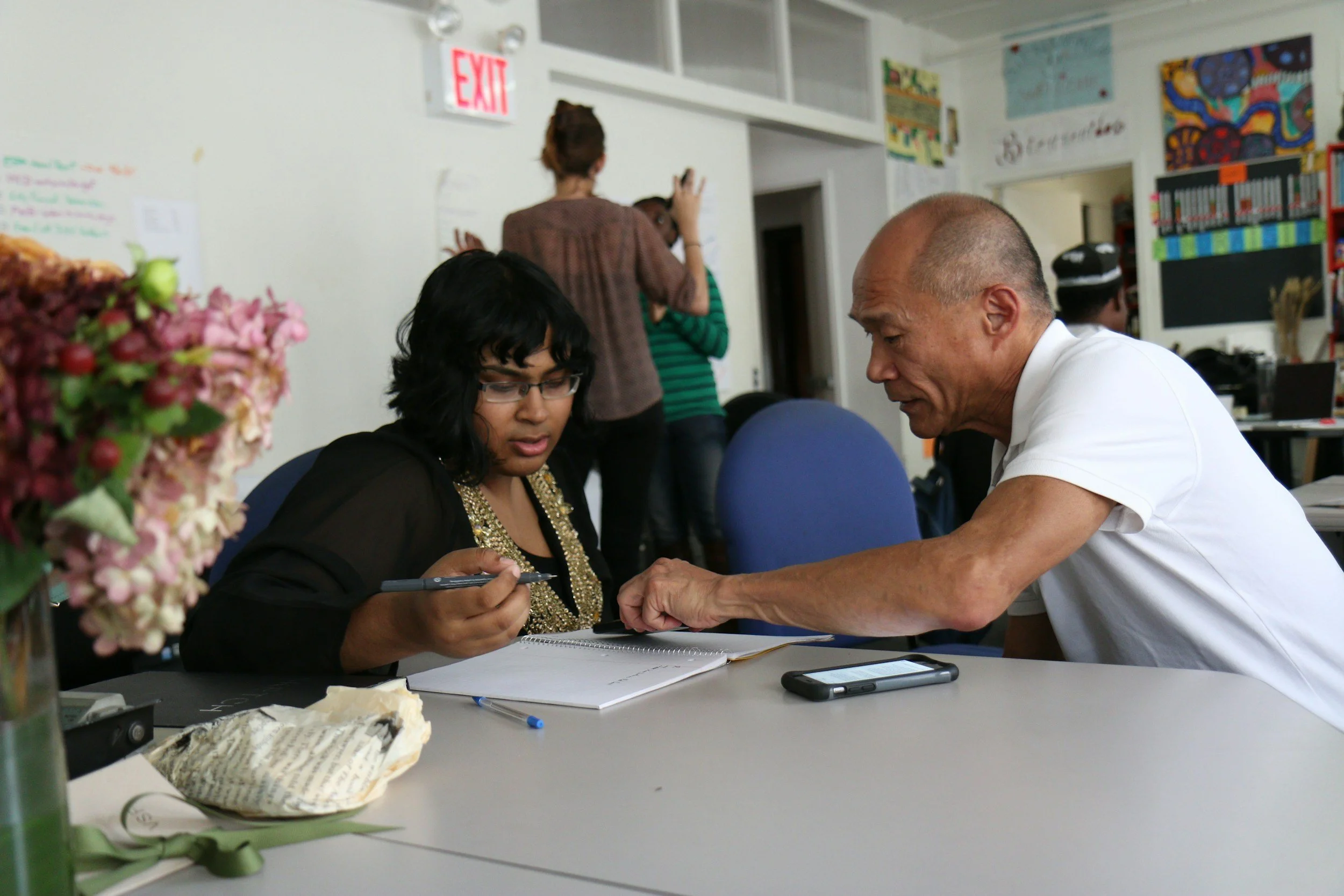
School Bags for Seniors?
That’s senior citizens not senior pupils. John Swinney’s eye-catching pre-election promise of a “welcome to school bag” from the Scottish Government for every primary one pupil got short shrift in the Common Weal Daily Briefing on 14 April. However, it got me thinking about the situation of older learners in Scotland (50+) and what educational policies might benefit them.
Two main aspects of later life learning can be recognised (i) broadly defined learning opportunities, often referred to as ‘lifelong learning’, with the implication that this is an opportunity mainly aimed at well-off retired people motivated to study and learn new skills; and (ii) more narrowly defined workplace upskilling and retraining opportunities for people seeking to extend their working lives or return to work following redundancy.
These are not mutually exclusive propositions and ideally Scotland should offer a creative blend of supports matched to different stages and transitions throughout the lifecourse of citizens. I will concentrate on the second aspect in this article and perhaps return to a more comprehensive analysis after the May 7th election.
Extending Working Lives for an Ageing Population
As our population ages and State Pension Age is raised, we face the dilemma of a workforce conditioned by demographic ageing (World Economic Forum, 2024) and characterised by systemic inequalities (Centre for Ageing Better 2025). A problem is how to support older workers who have lost jobs to redundancy but find it extremely difficult to get back into the labour market. In effect a ‘precariat’ in their 50s.
This is a problem of labour market weaknesses and the human resource strategies of organisations, which government can address through equality and inclusion polices. Ageism and human resource system failures are key factors in creating obstacles for folk in this age bracket, with depressing personal consequences. It also makes poor economic sense as this group, if properly supported, can become a ‘silver lining’ for the nation in the form of a motivated and productive economic resource into the 2030s and beyond.
There might also be benefits in mitigating social security costs if people are retained in work longer, provided they are healthy enough. However, there is little benefit in working people into the ground, simply to save on the welfare bill or shore up profits. Better to aim for a highly educated and democratically active society to shape the future of Scotland’s workplaces and educational establishments.
“So, what do the seniors have in their schoolbags? Skills and knowledge for sure. But also, memories, experiences, ideas, and insights for the coming generations.”
So, what practical strategies can Scotland explore? By luck UNESCO has published a new report just in time for the May 7th election.
Reskilling and upskilling for older adults’
This UNESCO research report argues for education systems to overcome barriers to inclusion and enhance later life economically and socially. Case studies explore how stakeholders and institutions in five countries (Singapore, Japan, Sweden, USA, and Columbia) meet the challenges. Findings cover practice in higher education, trade unions and NGOs and illuminate the benefits of multi-institutional collaborations linking employment, education, culture, and civic participation. Topics include tensions between employability and personal development programmes; re-entering the labour force; starting a business; enhancing communities and supporting civic engagement in later life. All topics for our coming election and the next Scottish government.
The case studies illustrate varied approaches. In Singapore the National Trades Union Congress advocates for learning in later life with the government and a network of employers. In essence a form of labour market co-ordination aimed at benefiting all stakeholders. In Japan the Rikkyo Second Stage College is a dedicated institution for older learners with a joint mission to support folk seeking employment and those wanting to transition into voluntary and civic society roles. This aligns well to Japan’s position as a super ageing society.
The Swedish case illustrates an approach combining unions, employers, and educational providers, with state financial support for return to work and job change. This system is embedded within the mainstream educational framework suggesting that a lifelong approach to learning can be framed at all stages of the lifecourse. The USA example targets the Felton Institute in San Francisco and centres on a ‘life beyond work’ model organised around engagement with NGOs and local government. Specific programmes include training for benefits counselling and enabling digital literacy.
Finally, the Columbian example focuses on entrepreneurship and is located within the Senior University (55 +). Training combines entrepreneurship, finance, and legal aspects of management, with guidance for business start-ups. A distinctive approach to learning for older people, as entrepreneurship education is more often associated with younger populations.
The case studies, commentaries and references provide a rich resource to explore, critique and relate to Scottish circumstances. In the meantime, what can the next Scottish government do?
From ageing society to learning society
First and foremost, the next Scottish government should incentivise existing collaborations and promote new ones to substantially improve education for older people in terms of employability and personal/social development. This would require convening meetings of stakeholders to identify problems, advocate for budgets, and propose creative system changes. Secondly, I propose a Citizen’s Assembly to review older people’s learning opportunities, ideally involving a case study of how best to provide information and support to assembly members. This approach would combine current expertise and ambition with input from the wider population and research into best practices. Gains all round for education, political economy, and participative democracy.
Conclusion
So, what do the seniors have in their schoolbags?
Skills and knowledge for sure. But also, memories, experiences, ideas, and insights for the coming generations. If we can empty all that sense of life and culture onto the table and build it into our society, then we’ll begin to create places of useful learning, progressive thinking, and perhaps a new sense of Scottish enlightenment for all our futures.