

In our In Common article this week, Craig looks at the Scottish Government taking an equity stake in an AI data centre developer and asks how vulnerable the Scottish Government is making Scotland to the AI bubble bursting.
News landed this week that the Scottish Government, via Scottish Enterprise, were manoeuvring themselves out of their controversial deals surrounding the Dalzell steel works in Motherwell (no family relation, that’s just where the seat of the clan used to be). It was announced early in the week that the £7 million the Government had given to Liberty Steel had been “paid back” but a few days later it was revealed that the loan had actually been swapped for a stake in a speculative data centre developer that was founded only two years ago. The precise details of the long web of financial dealings to allow the Government to “pay back” that loan by taking an equity stake elsewhere are too complex to summarise here and many of the details are still hidden from public view due to “commercial sensitivities” that should never apply when public money is involved.
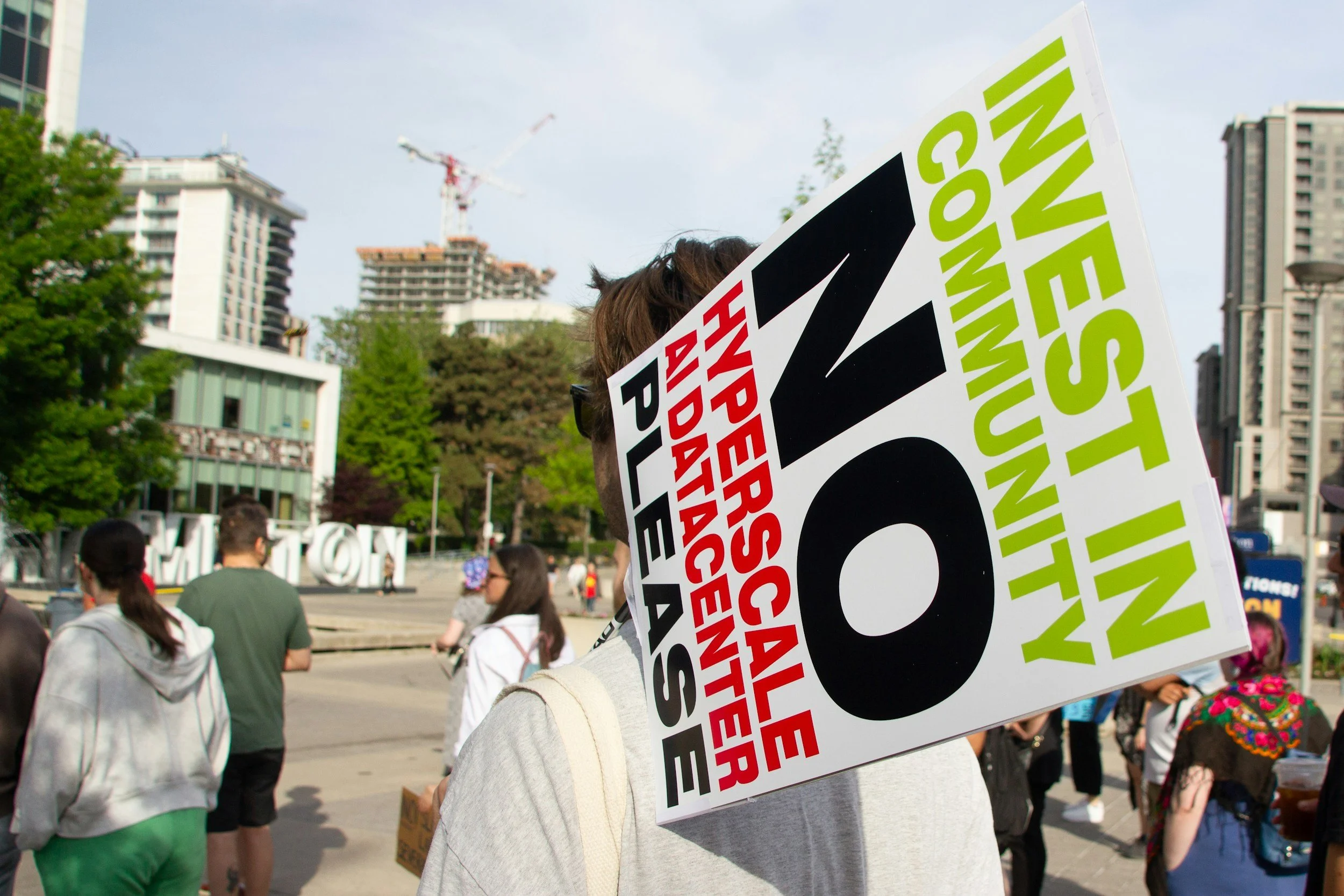
With severe signs that the global AI bubble is close to popping we really should be asking why the Government is tying itself and our public finances to the fate of that bubble.
Common Weal has been calling for governments to start taking more equity stakes in companies in Scotland for a number of years now and see it as a much better system than merely giving out grants or even giving out loans that do not give the government a direct hand in how its investments are managed, but there has always been an important aspect to this that I do not believe has been met in this case.
Where we have called for equity stakes, it has been in sectors involved with vital or foundational sectors in the economy that have a more than reasonable chance of making a return on that investment, especially where that return may only be realised in a time scale longer than more speculative finance is comfortable with.
“The Scottish Government is trying to get out of its own leaking rowing boat of a bad steel deal by climbing onto the Titanic.”
This means that government should absolutely be investing in social housing (which may not pay back its investment for several decades but which would then return an income or provide cheaper rents to tenants for generations afterwards) and they should absolutely be investing public stakes in energy (which will always have a demand and where it is clear that energy companies are, quite frankly, profiteering from Scottish households due to the lack of Scottish public energy companies).
There’s even a case for equity stakes in primary manufacturing like steel plants – controversies over the particular case of Dalzell aside.
This was why when we originally designed the Scottish National Investment Bank we called for its investment portfolio to be based primarily on housing and energy, which would give the Bank the fiscal security to invest a little more speculatively in interesting but uncertain Scottish startups or suchlike.
None of this applies to taking stakes in AI data centres. As tech journalist Cory Doctorow has pointed out, this sector is making the largest monetary losses of any industrial development in history. The speculative bubble has inflated to the point that it has sucked the life out of the electronics sector harder than the impact of the Covid pandemic (when everyone upgraded their PCs to work from home – now, no-one can buy the chips they need to replace those PCs and tech billionaires like Sam Altman are telling everyone that they shouldn’t because their RAM would be ‘more efficiently used’ if he owned the chips and rented them back to you), and Nvidia, one of the few companies that is actually profiting because they make the chips, is right now suffering a severe scandal because it appears that their CEO has had an affair with a spy [Note, since writing this article, Jensen Huang has resigned as CEO of Nvidia]. Anthropic, another of the big AI players, has slashed its company valuation in half right before its proposed initial public offering compared to values being floated in the summer and even that may be a substantial overreach given that a traditional valuation based on their “price to sales ratio” doesn’t work for a company that its losing $10 billion per month and promises to keep doing so for another three years.
None of this is sustainable, and the Scottish Government is trying to get out of its own leaking rowing boat of a bad steel deal by climbing onto the Titanic.
In our column here last week Robin pointed out some of the misinformed points being promoted by the Scottish Government’s Minister for AI and Strategy. We need to ask where his department is on this deal. What is the strategic plan for investment in AI data centres right at the point where the bubble may be popping? In addition to this equity stake, how exposed is the Scottish Government to other investments in AI? Has their been any strategic thinking on the broader economic impact if and when the bubble pops? Or how we can protect Scottish households from the negative impacts of that happening?
We cannot just hope that the promises of the benefits of AI will come true and that none of the negative consequences will. We also cannot properly evaluate the soundness of economic and investment strategy in AI when the details are so murky or are outright blocked from public view. The Scottish Government must do more to explain precise what they think they’re doing with investments like this and what, precisely, they hope to achieve.
