

The problem with humans
It is human nature to be wrong, to be petty, to be scared, to be angry. We cannot stop these things from being true so we have to recognise this reality as we built the systems in which we operate.
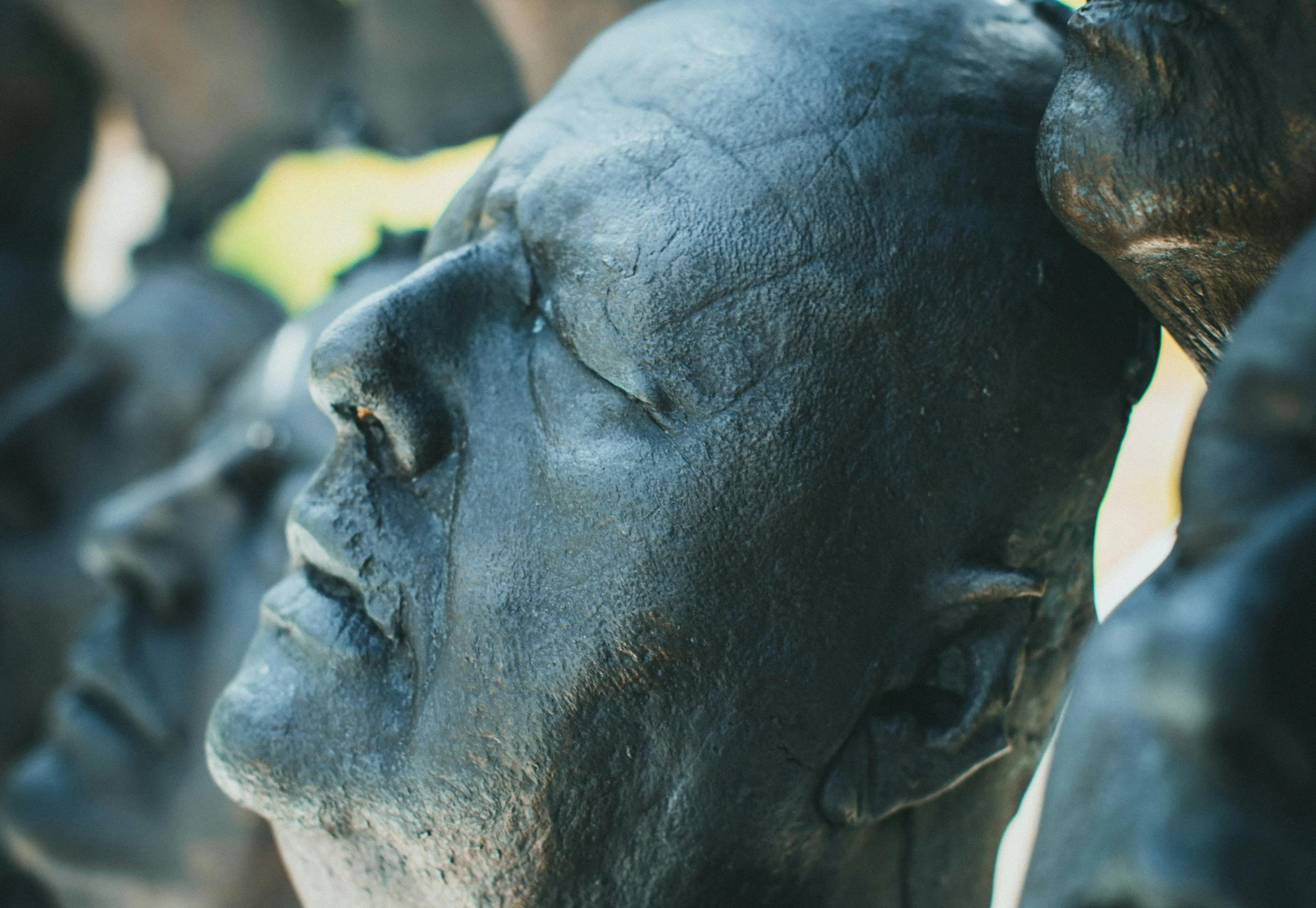
If I throw something at you when you're not ready your body will automatically curl up, make itself a smaller target, protect vital organs. You will also try and deny an FoI request that makes you look bad. If you trip and nearly fall, you will catch yourself, blush but then break into a purposeful stride like you always meant it. Or you'll fake over-confidence when a parliamentary question leaves you exposed.
If there is one biscuit left and you really want it and someone else hasn't had one but hasn't noticed it is there, selfish thoughts will run through your head and you will plan and scheme, whether you want them to or not; take away the other person and you will definitely eat the biscuit. Or fiddle your accounts to minimise your tax bill.
I was a young man in my early 20s ensconced in the heightened, fevered atmosphere of Westminster when I first really started to notice that these simple human truths look quite different when playing ball in the park and when it happens in politics – but they aren’t, they are entirely the same thing. So I started to learn why this all happens in the way it does.
I'm going to tell you what I learned, but the most important lesson is easy – you can't stop this happening. It's impossible. Humans are an actual nightmare. The only thing you can do is minimise opportunity and acceptability and encourage alternative behaviour. Human nature drives us forward or derails us according to the systems (and cultures) in which we operate.
So why does all this stuff happen? Let me give you two categories as an example.
You and I are unlikely to be chased by a lion. In fact, chances are you and I will never be chased at all (which is why they invented flip flops). Yet we have a whole internal system of automated responses to help us run away from lions, in two halves – nervous and endocrine.
The nervous system works on what are known as 'neurotransmitters'. These affect your brain and nerve responses. The endocrine system is your blood and its agents are hormones. These run round your body and alter how its various bits perform. Now in the case of the lion, it turns out that there is a dual purpose neurotransmitter and hormone – adrenaline acts both in the brain (where it is a variation known as noradrenaline) and the blood.
So let's just time our response when we see a lion in our peripheral vision. The time taken to release noradrenalin is measured in milliseconds. It takes only a few thousands of a second to release the fight or flight drug in your brain. This makes you extremely receptive, focused, on edge. It increases your threat perception very significantly, reducing other 'unneeded' brain functions (empathy is significantly reduced). That is in full cascade in well under a second.
And also in under a second the hormone form of adrenaline is released. It is only two to three seconds before it is working right throughout the body, redirecting blood flow to 'run-punch' muscles and away from your extremities and digestive system. Within three seconds your mind is racing to identify threat, your heart is racing, your hands and feet are cold and sweaty and you have an overwhelming desire to run.
This starts fast – it only takes perhaps two tenths of a second to identify a fast-moving object in our peripheral vision. Unfortunately we will almost certainly have to turn our heads and then it will take perhaps half a second to work out precisely what it is. Oh, it's not a lion, it was just a shadow from a bird.
Cool, don't panic. Except the noradrenalin is everywhere in the brain now and the adrenaline is already in our blood and heading round our body. So how long will it be there? Normally at least half an hour and regularly as long as an hour.
So what happens when someone accuses us of something serious? The same thing. It's just another threat. That person being bombarded with questions in parliament? Their bodies are primed to run from a lion. This is not good, calm thinking territory. It's half an hour of empathy deficit.
The other kind of problem? It is usually best known as cognitive bias, a series of faulty ways of thinking that we repeat even if we try very hard not to. It is best to think of your brain as a finely-tuned energy saving device. Calculating is exhausting – try counting backwards from 300 in sevens while walking. You'll probably stop walking. The brain can't manage that must processing at the same time.
So it has a cheat. Think of it as look-up tables. Once you have done something enough times you don't think about it any more, it is just an if-then. If road turns left, then turn wheel left. That's why we don't think about driving, why we drift off and notice its ten miles later and we can't remember it, even though we successfully navigated it.
The problem is that this cheat embeds problems. There are loads and loads of 'look-up' biases – confirmation bias (the ability to see only information which confirms what we already thought), sunk time fallacy (because you've spent time failing at something you need to keep going), anchoring bias (we relate all subsequent information according to the first bit of information we hear).
This makes us do mad things. It makes people listen to RFK and his antivax nonsense. It leads us to think that because we've spent two hours trying to open a box, it must get easier in the next hour. It leads us to think £50 is expensive only because the person started at £20. It is all screamingly illogical but we all do it and we do it every time, even if someone warns us we will do it.
“There is not a human alive who is incapable of making terrible decisions, of doing terrible things, of acting completely irrationally”
What I am trying to show here is that you don't need to be Peter Murrell to make bad decisions. We all do. Either because we have in-built response mechanisms in our body that are at times ill suited to modern life (we really shouldn't get the 'fuck, lion' effect when we check our social media, but we do) or because our brain gets sloppy when it is trying to save energy.
There is not a human alive who is incapable of making terrible decisions, of doing terrible things, of acting completely irrationally. It is in our nature. The only question is what we do about it – and that is where there is plenty to be positive about.
If we start designing systems with only the care that they cannot be used by malicious actors we have made a mistake. Of course we do need to guard against malice, but that is to see the problem the wrong way round. Rather than a threshold to stop the worst behaviour, we need to think instead of putting in place mechanisms which encourage the best in human nature from the start – being very realistic about its flaws.
There is much, much too much to cover here. There are way over a hundred cognitive biases alone and they all have potential impacts on politics and policy-making. So let me illustrate some of the ways we ought to be addressing them.
Let's take fight-or-flight as a starting point. I made this case after the failure of the Assisted Dying Bill. There are places where an adversarial approach makes sense and is the best way of doing things. Conflict is (sadly) the best way to draw from someone information they do not want to reveal. First Ministers Questions or cross-examination in the dock work.
But it is a crap way to finalise legislation. It is much better to see that as a process of inquiry rather than conflict. The efforts of political groups to 'beat' each other is bad for finding the best in policy, and the whole theatre of speeches and drama in a final debate is about winning, not thinking. We would do much better to negotiate all these questions in collegiate committee structures. Last minute amendments very often make bad policy.
We need to solve problems in public services and behaving like we're about to be eaten by a lion is a bad way to do that. Likewise cognitive bias – has a Scottish Government consultation ever not found what they wanted it to? Evidence-based policy is a counter to cognitive bias; instead we engage in policy-based evidence making. That is structural confirmation bias.
There are ways to present information that is easier to assess and ways that are harder to assess. That's the point of anchoring bias. We should encourage much more use of ways of presenting evidence and data which doesn't drift into 'gotcha'.
A lot of what I'm describing here was very fashionable 30 years ago – stakeholder government, evidence-based policy and all of that. The problem was that it was all voluntary and none of it stuck. That's why you need to build it into systems. That is what participatory democracy does. That is what Common Weal's Agenda for Pioneering Open Government did.
The other big factor is checks and balances. This is so, so essential. It is in human nature to hide failure and dishonesty. It's a variation of 'curling up in a ball to protect yourself' I started with. But in the long term it doesn't help you, so you need to be saved from yourself. Checks and balances need to be carefully designed and rigorously enforced. I've never met a person in power yet who didn't try to dismantle them.
And sadly, above all, we need to fear being caught. The possibility that you won't 'just get away with it' is a great behaviour modifier. You know that if you draw some 'watching eyes' on a bit of paper, people are two thirds less likely to litter? It is one of the weirdest human functions – we are half as likely to steal a cake from a room we're in alone if someone draws two circles with two smaller solid circles in them on one of the walls.
There is no stopping human error, no end to corruption, no way to not be a needy, self-interested person. It will always be there – right beside all the good stuff in humans. The question isn't how much of it we can endure, or how we stop it when it is too much; the question is how to try and make ourselves better humans in the first place.
The systems we build around us along with the culture and expectations we nurture will either save us or damn us. Let's make sure we understand ourselves before we do.