

Use energy to win independence, rather than independence to win energy
The Scottish Government is promising that independence will unleash our ability to reform energy. This neglects the things that they could be doing now that might just convince people that we need independence to win the rest.
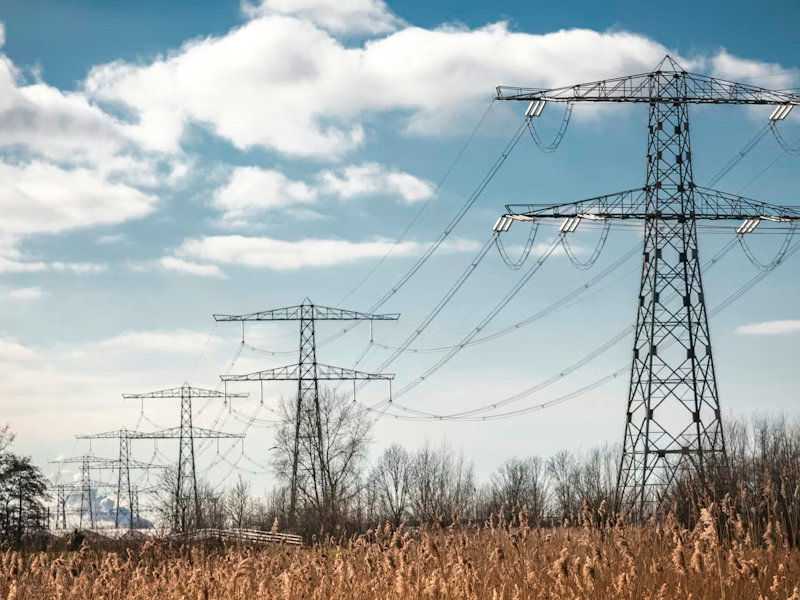
Image Source: Fer Troulik, Unsplash
Scotland doesn’t need independence to start owning our own energy.
It feels like 2025 has come full circle for us at Common Weal. January started for us with an announcement from the Scottish Government that it was “not possible” to bring Scottish renewable energy into public ownership – an announcement made after the publication of a poll showing that more than 80% of people in Scotland favoured them doing so. We responded with a briefing paper called “How to own Scottish energy” which laid out the logic behind their announcement, why that logic was flawed and how they could bring energy into public ownership despite their own objections.
In short, the Government’s stance is based on an extremely narrow reading of the Scotland Act which actively prohibits the Scottish Government or Scottish Ministers from owning electricity generating, storage or transmission assets. Under this reading, there cannot be a “National Electricity Company” designed and owned in the same way as some public corporations in Scotland like CalMac or ScotRail.
However, we showed in our paper that various options were not blocked by this prohibition. For example, a Minister-owned “National Heat Company” could be designed to build and own district heat networks to keep us all warm (the prohibition is specifically about electricity, not other forms of energy). The Government could also build a National Energy Company and hand ownership over to a consortium of Scotland’s 32 Local Authorities. Or each Council could own their own energy companies. Or the Government could back the creation of a private energy company that is mutually owned by every adult resident of Scotland. Or, instead of complaining about the limits of devolution, they could be applying pressure on the UK Government to amend what is very clearly a completely obsolete prohibition in the Scotland Act (especially as a narrow reading of it also prohibits the Scottish Government from erecting solar panels on its own buildings).
Come forward now to December and the SNP have kicked off their 2026 election campaign with a new paper essentially saying the same thing as they did earlier this year except framing it around “we’ll do it, but only after independence”. On public ownership in particular, they aren’t advocating for the full-scale nationalisation of energy but their ambition appears to extend only to communities owning up to 20% of local renewable projects.
20% is far better than the current level of a rounding error above 0%, but it’s clear that even within devolution, the Scottish Government could do far more than it’s currently doing to support communities by giving them grants and loans to purchase stakes in developments, to pressure developers to sell or grant those stakes to communities as a condition of planning permission or the renewal of licences and to actively use opportunities like the “repowering” of developments, the end of their licence periods and break-clauses in contracts that would allow poorly performing developers to have their licences withdrawn and transferred to public bodies (in much the same way as the Government took ScotRail back from Abelio in 2022)
This doesn’t get the UK Government off the hook though.
Their recent announcement that some £28 billion will be added to consumer energy bills to pay for vital energy grid upgrades is going to stick in the craw of people whose energy bills are already too high. Worse will be that most of the profits of that investment will flow into multinational companies – including foreign public energy companies – with none returning to the consumers themselves. These investments, too, should be made on a staked ownership basis so that the people paying for them – us – should become shareholders in the investments and see a return on our investment. To make things perfectly clear, if the UK Government had announced that it was going to fully publicly own the assets built via this spending, then the added costs on your bill would be the same. In other words, the choice to publicly own the UK’s new energy assets will cost you the same as the choice to leave them in private hands.
“Can’t we use our public owned energy to help win back our independence, rather than claiming more weakly that we can use independence to win back our energy?”
The same will be true of assets in an independent Scotland – but given the Scottish Government’s “all in” approach to “inward investment” (something their plan published this week mentions more often than public ownership), I can completely see them making the same mistake and forcing us to pay for assets that someone else will profit from.
I freely admit that there are aspects of Scotland’s energy transition that are not in Scotland’s hands and which are not likely to be easily negotiated away as part of an adjustment to devolution such as Scottish consumers being forced to pay for extremely expensive and risky nuclear projects that even NESO (formerly, the National Grid) now says are not needed to meet Green energy targets but this does not let the Scottish Government off from making the changes it can make now rather than using the dangling carrot of independence as a means of delaying action. If anything, independence will come less from making a promise that might be fulfilled afterwards but by taking tangible actions now that push devolution to the limit and then saying to voters “if you want more, you know what to do”.
If it truly is, as the Scottish Government says, Scotland’s Energy – then shouldn’t we take back as much as we can now as use that as leverage to win the rest? Can’t we use our public owned energy to help win back our independence, rather than claiming more weakly that we can use independence to win back our energy?
