

A new report from Moody’s warns that the impact of the climate emergency is proving so hard to predict that the losses and damage caused by it are increasingly difficult to insure.
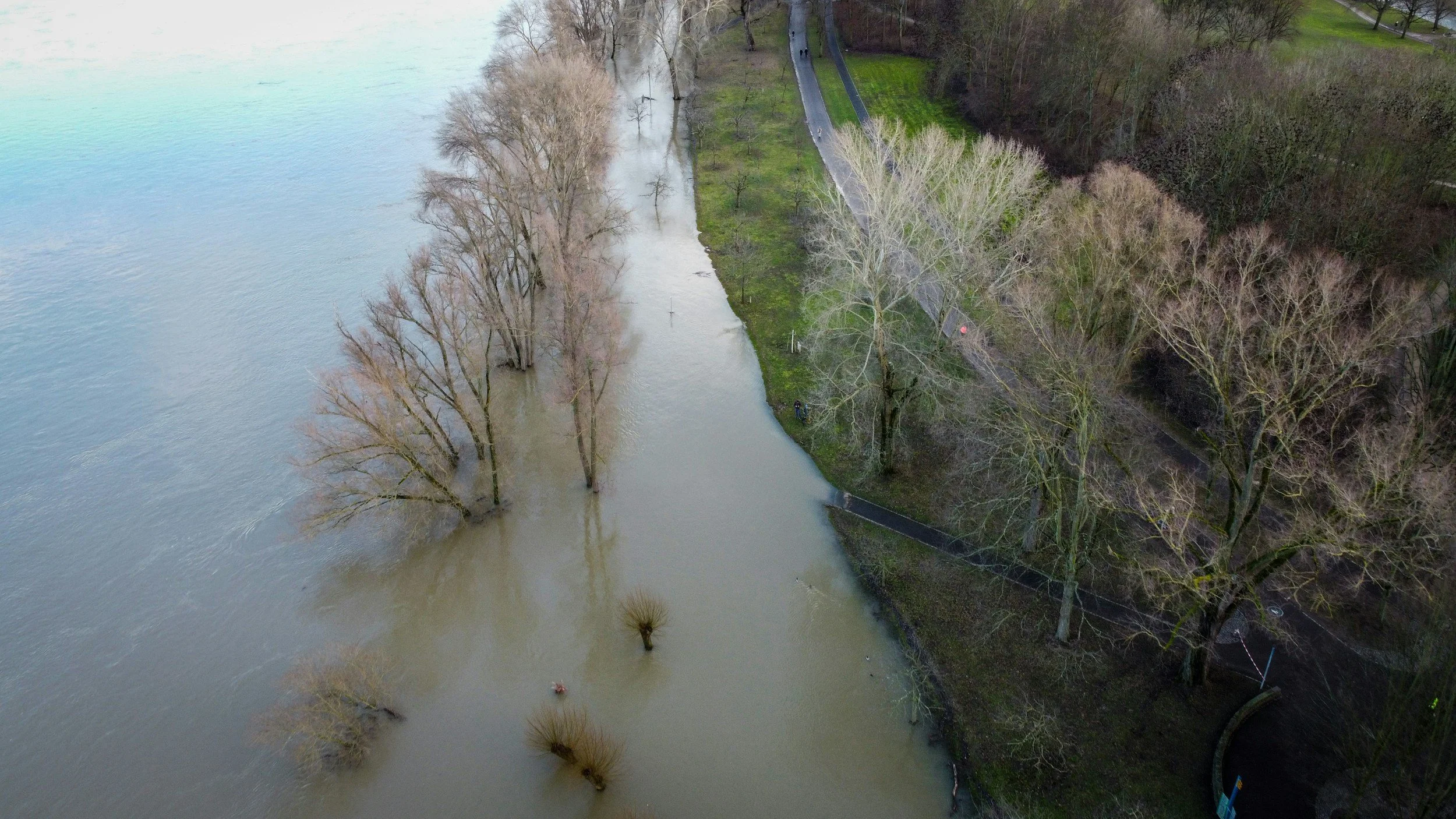
In an uncertain and unpredictable world, insurance is mostly a good thing (I’ll write an article sometime about when it’s not – it’ll mostly be about the US healthcare system). Climate change is proving to be a challenge for it, though – one that might actually be the thing that forces global adaptation and policy change when other things like activist campaigning or actual scientific data have not.
Consider your house. You live on a flood plain, which means that your house is in a zone covered by a “100 year flood”, meaning that you could expect a flood severe enough to damage your house once every century. Such a flood would cause £100,000 worth of damage. You could fairly expect the insurance value of your house to be about £1,000 per year. An insurance company that charged less than that would eventually find itself paying out more than it brought in.
There’s a problem with the assumption that your house will only get flooded once per century. The climate is shifting rapidly. I’m writing this piece on the day that the UK once again breaks high temperature records. I also read a piece this week about the danger of romanticising the 1976 UK summer heatwave, while reflecting that the UK hasn’t seen average annual temperatures as low as that of the average temperature in that heatwave year since 2012 – the dangerously extraordinary has become dangerously normalised. (1976 was before my time. The first heatwave I have strong memories of is the 1998 one. It’s unlikely I’ll live to see a world as relatively cold as that year was either.
But this (overly) simple calculation doesn’t tell the whole story. If you made an insurance claim after your house was damaged, you’d rarely expect to get the full £100,000 paid out to you. Insurance policies often have an ‘excess’, an amount you have to pay yourself before damage in excess of that amount is paid by the company (in the US, they call it a ‘deductable’, an amount the company deducts from their payment to you).
This linguistic choice tells us a lot about whether the sector is focused on the company first or on the person making the claim. Further, there are often reasons that a company would not pay out. For instance, many people whose flights were cancelled or disrupted due to Trump’s attack on Iran found that their insurance didn’t cover losses due to acts of war. We’re also assuming that your policy would actually cover £100,000 worth of damage - many people are ‘underinsured’ for the true cost of their losses, particularly if they haven’t updated their policies recently to account for inflation and increases in building costs.
Looking to the future and accelerating climate damage, if a ‘100-year flood’ starts happening every 50 years, your insurance costs would have to double. If you start getting flooded out every decade, you’d probably be cheaper moving elsewhere – but good luck finding someone who’ll buy your house from you. You can run the same kind of calculation about your risk due to sea level rise, wildfires, droughts, heatwaves, storm damage, and every other impact being made worse by the climate emergency.
And that’s if the insurance companies get their estimates right in the first place. If they cost your insurance based on a 100 year flood in a world of 10 year floods, they will very quickly go bankrupt. This is the problem facing global insurance companies, as per a new report from Moody’s.
Between excesses, exclusions, people not buying insurance, and the trouble with estimating insurance values, they estimate that the changing climate could result in $41.4 trillion per year worth of uninsured climate damage globally by 2040. They’ve even created a global map of where and how those losses may manifest. For instance, the rising frequency and intensity of Californian wildfires mean that it’s increasingly difficult now to cover fire damage – 30 per cent of losses are likely to be uninsured.
“It might well be that the threat of losing money proves to be the thing that pulls over those who weren’t convinced by inconvenient things like actual data.”
By this measure, the UK comes off actually quite lightly. The near ubiquity of home and property insurance (usually a basic requirement if one has a mortgage) means that basic cover is quite broad. But still, there is a rising threat of things like flood and storm damage, which means that Moody’s estimates that 25% of the cost of damage and loss from either would be uninsured by 2040.
Part of the problem is that climate damage has been creeping up on us quite slowly, and insurance companies have tended to be reactive rather than proactive – they increase rates after they see their claims start to rise, rather than modelling ahead of time what they could become.
The costs of climate losses are becoming significant, though. They almost certainly outpace the annual profits of the oil companies that have produced the climate damage – yes, this means that the price of oil (high as it is) would be selling at a loss if the oil companies had to pay to clean up their own mess. Instead, we all have to pay even more because they don’t.
Climate activists have been campaigning to try to prevent the climate emergency for decades. Scientists have known it would happen for well over a century. Oil lobbyists have spent lavishly on our politicians to ensure even greater profits can be reaped without having to pay for the consequences. And wars have and are still being fought to keep the pipes flowing.
It didn’t have to be that way, but where scientists and activists could be ignored, it might well be that the insurance agents are the ones that can’t be. It might well be that the threat of losing money proves to be the thing that pulls over those who weren’t convinced by inconvenient things like actual data.
The problem is that this is a reactive force. Only once people see the damage happening will they respond. But the climate effects are so gradual that even if we collectively stopped emitting CO2 globally today, the climate will continue to get worse for perhaps decades still before things begin to repair.
This isn’t a reason not to do that. Every tonne of pollution makes the problem worse. Every day of delay makes the problem worse. Every politician calling for more oil extraction despite all of the evidence to the contrary makes their own contribution to global ecocide worse. But also, every tonne of pollution avoided by switching to renewables or reducing unnecessary demand makes the problem less worse by the same degree.
The solution is in front of us. We know how to fix the climate emergency. It won’t require magic technology, mass poverty, or a collapse in wellbeing – quite the opposite. The solution is a world that, once we live in it, we’ll wonder why we didn’t demand it sooner.
