

Finally, Local Government Reform - But it must be done right!
The Scottish Government’s sudden push for local government reform should be welcomed but their proposal as it stands needs a lot of work to make sure that it’s not a chaotic mess or a recipe for corruption and centralisation.
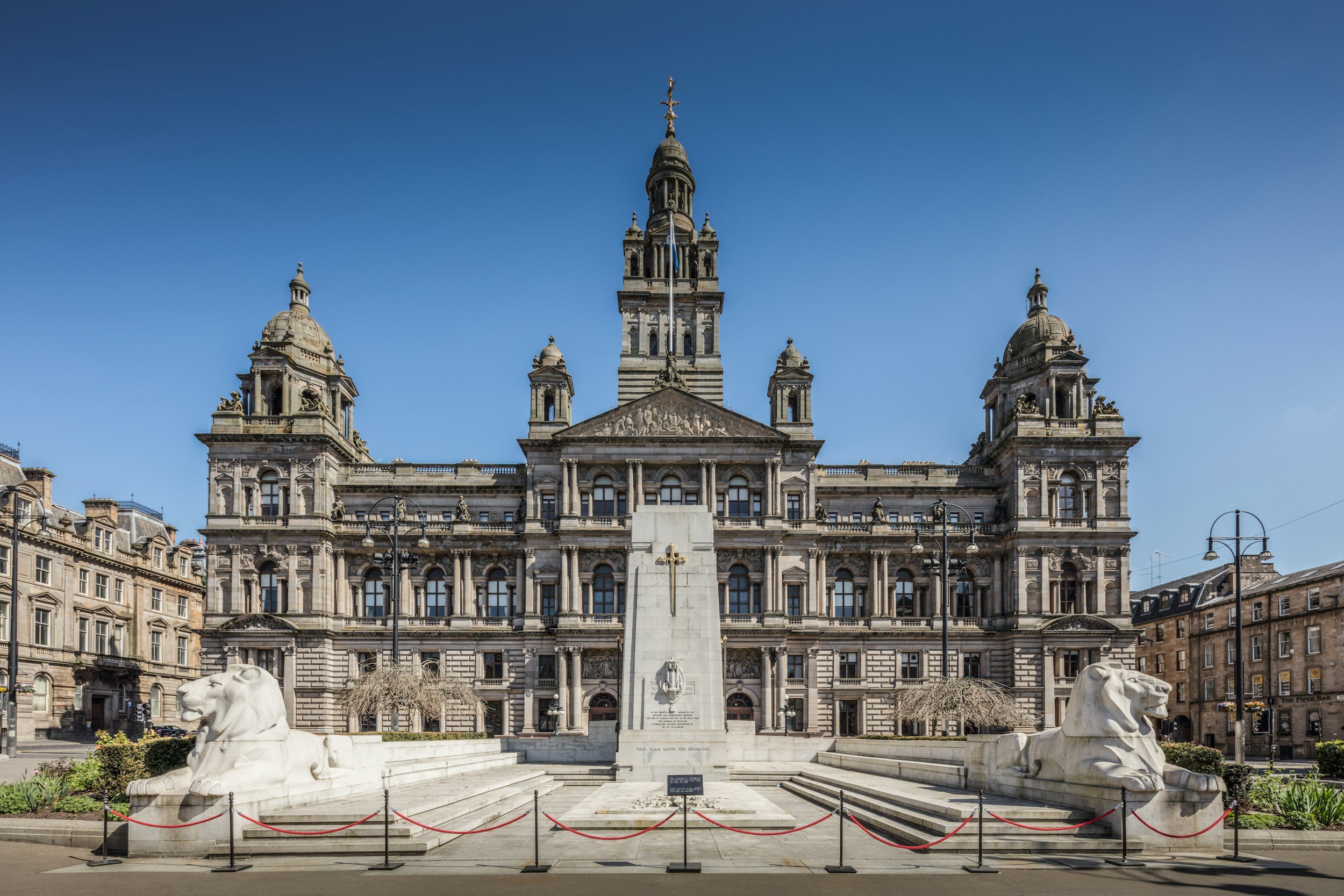
Recently, First Minister John Swinney said that the current way we run Local Government in Scotland means that Local Authorities are “too big to be local and too small to be regional”. Except he didn’t really. He took that line, without credit, from Common Weal and our campaign for local democracy reform.
It’s a pity that he didn’t take more from us or even ask us for a briefing on our own work on the topic before yesterday’s surprise announcement of what could end up being the largest reorganisation of Scottish local government in more than 30 years.
The proposals are, at this stage, just a first stab at this plan and as of the time of writing it’s too early even for a public consultation (which we shall be engaged in) but even at this there are messages worth picking up and informing you about.
The first is that, contrary to previous hints at the Government’s thinking in the Programme for Government, there is actually a local tier of democratic governance in this proposal (the PfG stated only that local communities would be able to “influence local decisions”, not control them). New districts (formally called “Community Authorities”) will be formed by splitting the current Local Authorities into 3-5 sections forming between 120-160 local government bodies across Scotland which will elect Councillors using the same multi-member ward, STV system of voting that Local Authority Councillors are currently elected on.
Simultaneously, the current Local Authority boundaries will be merged so that 32 Councils will become between six and ten Regional Authorities. These will not have elected members or a separate vote but instead each District Councillor will double-job as a Regional Councillor too.
And this leads to a major problem. The dash to prevent the need for “more politicians” (both on cost grounds and likely to avoid political backlash) puts the plan in a double-bind.
As Allan Faulds of Ballot Box Scotland has pointed out, if Scotland maintains the current number of Councillors at 1,227 then District Councils become very small with between 7 and 10 members each. For comparison, an average municipal council in Germany consists of about 20 members but also represents a much smaller population (average 9,000 residents). A German municipality covering a population of the size proposed by these districts (around 35,000 to 45,000 people) would have 30-40 Councillors and only the smallest of municipalities with populations fewer than 1,000 residents would be represented by fewer than 10 Councillors.
The other side of double-jobbing the District Councils means that each Regional Council becomes extremely large, with as many as 200 members sitting on it. Given that Local Authorities have largely sold off the buildings they haven’t used since the 1993 reforms (and we don’t know where the boundaries of the Regions will be yet) there’s a serious issue of where to host the Regional Councils if they are to be this size.
One workaround would be to cap the Regional Councils at, say, 100 members but this means either that Districts have to decide who to nominate to sit at Regional level and means that some of your Councillors will have power over some things that others do not – a much more blatant “two-tier” system than the List MSPs in Holyrood are (falsely) accused of being. Worse, Communities that used to be served collectively by around 30 Local Authority Councillors could find themselves electing as few as four members to run their District. It would be almost trivial for a political party clique (or even a married couple) to take complete control of their District. This is not democratic.
At a Regional level, either the approach of doubling every District Councillor or even nominating just some of them is a better approach than the proposal to directly elect Regional Provosts who would have direct and unilateral control over strategic decisions. This plan – apparently being expanded in England by former Regional Mayor Andy Burnham – would be even less democratic and even more centralised than the plan being proposed by the Scottish Government here (I wonder if this is intentional and that the sudden push for the regionalisation of Scotland has more to do with countering the plan for Provosts than it represents a genuine desire for local democracy, especially given Swinney’s poor track record when it comes to respecting local authorities).
On that note, what happens to Cosla is very much an open question here. Cosla currently represents the collective will of the 32 Local Authorities. Reducing its mandate to representing the Regions risks again making it easier for a small party clique to take control of the whole body – which might be the point. Cosla was one of the major factors in reigning in the worst of the Scottish Government during the National Care Service debate to the point that when Government found that it couldn’t sustain the plan to pull sole control of care away from Councils and give it to Ministers they instead set up a “tripartite” control board consisting of Government, Cosla and the NHS – the latter almost certainly being included as a means of providing a whipped vote in favour of Holyrood.
The proposals for which powers to sit where are not yet well developed though on the face of it, and if we use planning permission as an example, Regional Councils would be responsible for “strategic” decisions like whether or not a developer gets planning permission to build a new housing estate while District Councils would be responsible for “local” decisions like whether you, as a household, get planning permission for an extension on your house. While Swinney did mention ideas like devolving powers from Holyrood “or even from Westminster” to a more local level, it’s hard to find examples of powers at that level that might come to District level, and so this plan does appear to be one of centralising Local Authority powers to Regional levels more than moving powers to District level.
Also not developed is the cost of the whole endeavour. The 1993 reforms cost around £400 million at the time which in today’s money is closer to £1.2 billion. This isn’t an absolutely outrageous sum in national government terms but it’s a substantial one and may not factor in costs such as the need for the construction or purchase of new Regional Parliaments given that we don’t know how many we need or how large they’ll be.
“Common Weal’s own plans for local democratic reform which would be focused on a “local first” approach”
I’m worried that this proposal will suck the air out of necessary reforms that should be happening in this Parliament but clearly won’t be (and, again, I very much worry that this is intentional). In our review of the Programme for Government we noted that the push for land reform has apparently stalled. Local Governments would greatly benefit from a local Land Tax that, in our model, would raise around £450 million per year. To implement this land tax (which, it should be pointed out, would be controlled at District level if Scotland copied the standard format for land taxes in countries like Denmark and Estonia) we also need Council Tax reform. Nether is likely to happen if Scotland is busy redrawing district and regional boundaries especially if we don’t yet know who will be collecting the taxes and who will be spending the revenue.
Common Weal’s own plans for local democratic reform which would be focused on a “local first” approach can be read in our blueprint for Development Councils. The key difference is that our proposal would be based on setting up new municipal scale councils and allowing them to “draw down” powers from Local Authorities as and when they need them – only once enough Development Councils have permanently pulled powers down to a local level that the Local Authorities are left with the larger scale strategic powers would they then consider merging into Regional Authorities to better use them. This phased approach would avoid the inherent tendency towards centralisation, would make the reforms more manageable by giving regions time to adapt to emergent needs rather than those needs being anticipated from the top, and – crucially – our plan would be founded on local democracy with both elections for a substantial municipal council and oversight from a Citizens’ Assembly of local residents.
I’m willing to wait for the public consultation to more fully analyse the Government’s proposals and to develop our response. I’d be even more willing to accept an invitation from the Government to present our work and help shape their proposals in person.
I’m in favour of more local democracy in Scotland – I’ve spent too many years saying that Scotland should have a local democracy that the rest of Europe calls “normal” to be otherwise – but these reforms haven’t been thought through nearly well enough and the Government hasn’t even approached key experts in Scotland to work out the ideas before floating them in public. I hope they remain as open-minded as they say they are so that the plan can be improved.
