

Britain NEEDS A NEW IDEA OF PUNISHMENT
We know that prison fails to make us safer. So why is it still so politically difficult to change? Scotland has an opportunity to rethink not just how we use prison, but what we believe punishment is for.
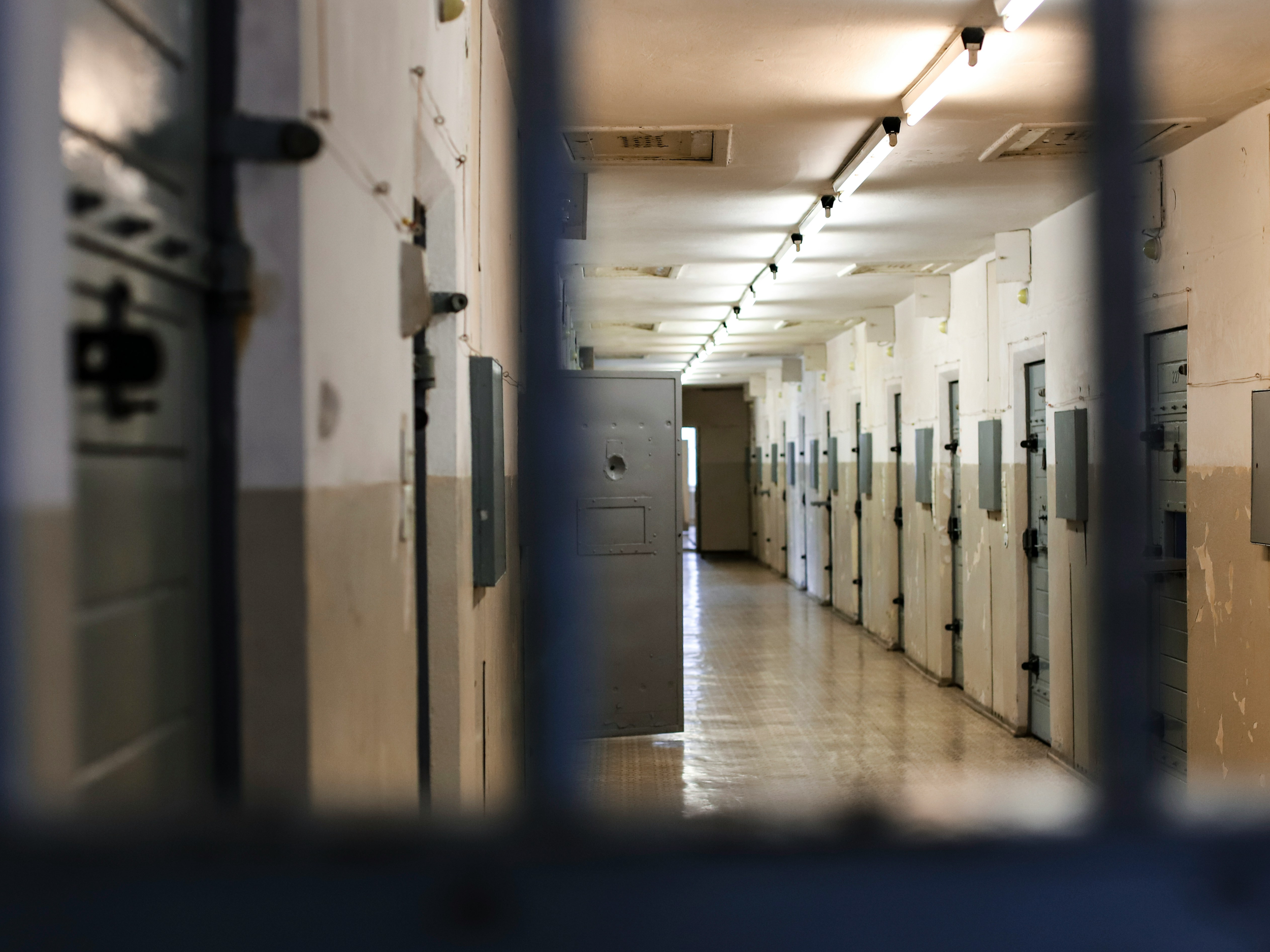
Something is revealing about the current British prison crisis. In Scotland, ministers are consulting on a package of reforms designed to reduce the use of custody and create a more sustainable prison population. In England and Wales, the government is wrestling with an overcrowded prison estate while Prime Minister Andy Burnham has paused a planned early-release scheme amid mounting political and public pressure.
The details of the systems are different. The political problem is remarkably similar. Britain imprisons too many people, for too long, in systems that struggle to rehabilitate them. Scotland currently has one of the highest imprisonment rates in Western Europe, at around 148 prisoners per 100,000 people, compared with 54 in Norway, 55 in the Netherlands and 69 in Germany.
And yet whenever governments attempt to reduce imprisonment, the same argument returns: what will the public think? This is the part of the debate we tend to avoid. We talk about prison numbers. We talk about overcrowding. We talk about sentencing. We talk about rehabilitation and reoffending. But underneath all of these is a much more difficult question: what do we actually believe prison is for?
That is a question Scotland’s new Parliament should be willing to ask. I argued recently that a new Scottish Parliament needs more than another list of policies. It needs something to say about what kind of country Scotland wants to become. Criminal justice is an obvious place to begin. Because Scotland has an opportunity to do something rather more ambitious than simply rearrange its sentencing rules.
It could challenge the culture that has made imprisonment the default expression of seriousness. The problem is bigger than Scotland. It would be easy to treat this as a uniquely Scottish problem. It isn’t. England and Wales have one of the highest rates of imprisonment in Western Europe. Their prison population stood at more than 85,000 in June this year, following decades of growth.
The political consequences are now becoming impossible to ignore. The government has been forced to confront a prison system operating under enormous pressure, while its attempt to change release arrangements has become politically toxic. Burnham’s decision to pause the planned scheme illustrates the difficulty: even when governments recognise that the existing system is unsustainable, changing it can become almost impossible once the public debate turns towards individual cases and fears about public safety.
That should matter to Scotland. Because it demonstrates that prison reform is not simply a technical question about sentencing legislation. It is a question about political culture. If politicians believe that any reduction in imprisonment will inevitably be punished at the ballot box, then evidence alone will never be enough to change the system. Something else has to change first.
Norway asked a different question. Norway offers a useful example. The country’s prison system was not always the model of rehabilitation that it is now. In the late twentieth century, recidivism was extremely high. The response was not simply to increase punishment. Norway examined what its penal system was actually achieving and embarked on a fundamental change in philosophy during the 1990s. The principle that emerged is remarkably simple: the punishment is the loss of liberty.
The Norwegian Correctional Service states explicitly that no other rights have been removed by a sentence. Prisoners should therefore experience conditions that resemble ordinary life as closely as security allows, and should be held in the lowest possible security regime. That sounds radical only because our own system has come to associate punishment with deprivation far beyond liberty.
Norway’s model does not mean that prison is pleasant or that offending is forgiven. It means that imprisonment has a purpose beyond suffering. Education matters. Employment matters. Family relationships matter. Mental health matters. Relationships between staff and prisoners matter. The question is not simply: how much punishment does this person deserve? It is also: what needs to happen while this person is here if we want fewer victims in the future? That is a profoundly different conception of justice.
And it is worth noticing that Norway’s own official description of its system does not present this as kindness for its own sake. The rationale is security. The restrictions imposed on prisoners should be no greater than necessary to protect the community. In other words, rehabilitation is not being treated as the opposite of public safety. It is being treated as public safety. That is a crucial distinction.
Why is this so difficult to sell? Because the public does not approach punishment as a purely rational policy question. Research into public attitudes towards sentencing suggests that knowledge matters: when people understand more about how sentencing actually works, they can become less punitive. But information is only part of the story.
“A prison system is not a natural phenomenon. It is a political choice. ”
People’s attitudes towards punishment are also shaped by their ideas about individual responsibility. In a society that places enormous emphasis on individual autonomy, it is intuitively appealing to believe that people who commit crimes have made choices and should therefore experience consequences. There is nothing irrational about that instinct. Nor should a progressive justice system dismiss it.
Punishment carries emotional weight. Crime produces anger, fear, grief and disgust. Victims deserve recognition. Communities deserve safety. A justice system that responds to those emotions by simply telling people that they are wrong to feel them will never build legitimacy. This is why arguments for penal reform so often fail. We present evidence about reoffending rates to people who are asking a fundamentally moral question. We say that short prison sentences can be ineffective. They hear: you don’t think what happened was serious. We say that community sentences can reduce reoffending. They hear: criminals are getting away with it. We say that prison causes disruption to housing, employment and family relationships. They hear: the offender’s circumstances matter more than the victim’s.
The answer cannot be to abandon evidence. It is to learn how to connect evidence with the values people already hold. Most people probably want both punishment and rehabilitation. There is another mistake we make when discussing “public opinion”. There is no single public. People’s views on sentencing vary according to their experiences, education, social circumstances, perceptions of crime and political outlook. Some are primarily concerned with punishment. Others are primarily concerned with rehabilitation. Many are somewhere in between. And that middle ground is politically important.
There are people who believe that offenders should be held responsible for what they have done while also believing that society is safer if they do not offend again. Those positions are not contradictory. In fact, they may represent the beginning of a new consensus. The argument for rehabilitation should therefore not be: be nicer to criminals. It should be: If someone has harmed another person, we should hold them accountable. If we can reduce the chance that they will harm someone else tomorrow, we have an obligation to do so.
That is not softness. It is an argument for fewer victims. And it gives us a much better way to talk about prison. We cannot reform what we are afraid to explain. This is where Scotland’s new Parliament could have something meaningful to say.
If we simply announce that fewer people will go to prison, we should not be surprised when people worry that the justice system is becoming less serious. But imagine doing something different. Imagine a sustained public conversation about what imprisonment actually achieves. Show people the evidence on short sentences and reoffending. Explain what a Community Payback Order actually involves. Show what intensive supervision looks like. Explain why someone can be held accountable without being imprisoned. Talk openly about the circumstances that drive offending without pretending those circumstances excuse it. Let victims speak about what justice means to them. Let prison officers explain what rehabilitation looks like from inside the system. Let people who have served sentences explain what helped them stop offending. And, crucially, stop presenting rehabilitation as a concession to offenders. Present it as an investment in everyone else’s safety.
That is not public relations. It is democratic education. And it matters because legitimacy cannot be manufactured after the policy has been decided. If people experience the justice system as opaque, arbitrary or detached from their values, distrust will follow. Public confidence has to be built into the system itself. Scotland has a choice. The Scottish Government’s current prison reform consultation contains many sensible proposals. Strengthening community sentences makes sense. Reducing unnecessary use of remand makes sense. Questioning short custodial sentences makes sense. So does ensuring that prison is concentrated on those who genuinely need to be incapacitated for public safety. But legislation alone will not produce a different penal culture.
Scotland’s prison population has risen even as recorded crime has fallen substantially, while the long-term prison population has grown sharply. The problem therefore cannot be solved simply by adjusting the machinery of sentencing. It requires a change in what we expect that machinery to achieve. That is why Norway is worth looking at. Not because Scotland should copy another country’s prison system wholesale. Norway has a different population, welfare state and political culture, and international comparisons have limits. But it demonstrates something important.
A prison system is not a natural phenomenon. It is a political choice. The way we design prisons reflects what we believe punishment is for. We can choose to make imprisonment primarily an experience of deprivation, humiliation and containment. Or we can choose to make the deprivation of liberty the punishment while using the period of custody to make the person more capable of living safely outside it. The second approach does not require us to forget victims. It does not require us to minimise violence. It does not require us to pretend that everyone can be safely managed in the community. It requires us to ask a more uncomfortable question: What is the point of punishment if it does not make us safer?
England and Wales are discovering how politically difficult it is to change course once a punitive culture has become entrenched. Scotland now has an opportunity to do something different. But doing so will require more than a new sentencing framework. It will require politicians willing to explain reform rather than apologise for it. It will require evidence to be put in front of the public rather than confined to consultations and policy papers. And it will require a new political language in which accountability and rehabilitation are not treated as opposites.
Perhaps that is one thing Scotland’s new Parliament could say. We do not have to accept that the only way to demonstrate that crime is serious is to make prison harsher. We can take wrongdoing seriously and take rehabilitation seriously. We can believe in consequences and believe in change. And we can judge our justice system not by how much suffering it can impose, but by whether it leaves fewer people needing it in the first place. That would be more than prison reform.
It would be a different idea of justice.
